Advancements in CFET Technology Promise Faster, Smaller, and More Reliable Semiconductor Transistors
July 21, 2026
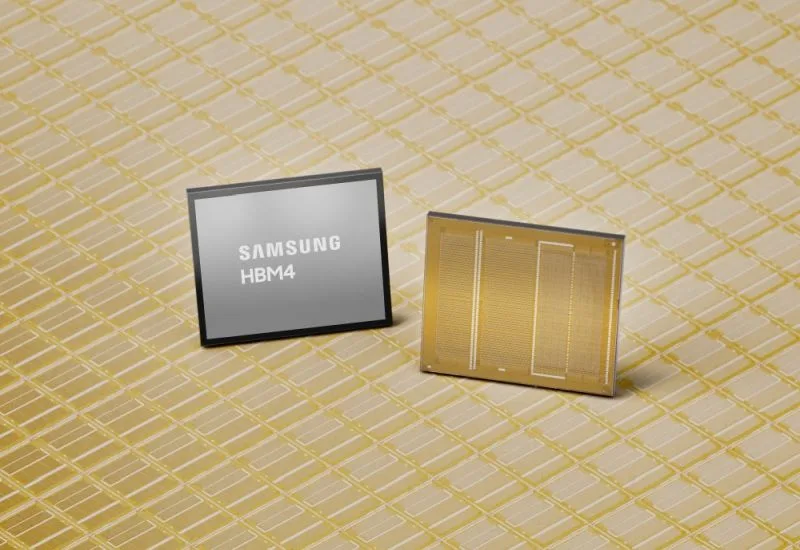
Samsung Electronics is positioning itself to reclaim a leading role in the high-performance memory sector amid the expanding artificial intelligence (AI) market. The company announced plans to commercialize its latest high-bandwidth memory technology, HBM4, with pricing set notably higher—by approximately 20 to 30 percent—than the current generation HBM3E chips from competitor SK Hynix.
In recent years, SK Hynix has gained significant traction in the memory industry with its HBM3E products, finding a lucrative niche driven by the demands of AI workloads. This success has enabled SK Hynix to capitalize on rising needs for advanced memory architectures capable of handling intensive data processing.
Samsung, historically the largest memory manufacturer globally, is intensifying its efforts to narrow the gap with its smaller rival by accelerating development and commercial deployment of HBM4. This next-generation memory technology promises enhancements tailored to the increasingly complex requirements of AI applications, where bandwidth, power efficiency, and integration density remain critical metrics.
By setting the price of HBM4 chips notably above the current HBM3E offerings, Samsung appears confident in the value proposition of its new products. The premium pricing could reflect advancements in performance or efficiency that Samsung believes justify the higher cost to data center operators, AI hardware developers, and other end users.
The move underscores the competitive dynamics in the semiconductor memory sector, where innovation cycles and strategic positioning have substantial impacts on market shares. Samsung’s approach signals a commitment to maintaining technological leadership even at a higher price point, betting on customers prioritizing performance gains aligned with AI workloads.
While specific details on the technical specifications, availability, or supply chain logistics related to Samsung’s HBM4 release remain under wraps, it is clear that the company sees the ongoing AI boom as a critical driver for memory technology evolution. The HBM4 launch may set a new performance benchmark and influence industry pricing standards, especially as data-centric computing continues to expand across sectors.
Overall, Samsung’s move to launch HBM4 with a premium over SK Hynix’s HBM3E highlights the intensifying competition in memory solutions designed for next-generation AI systems. The development marks a notable chapter in the evolving landscape of semiconductor innovation where market leadership hinges on advanced product offerings that meet the rapidly growing demands of AI workloads globally.
Samsung aims to regain leadership in AI memory by selling its HBM4 chips at a 20–30% premium over SK Hynix’s HBM3E.