Huawei Launches Licensing Program for Wi-Fi 7 Patents to Support Industry Adoption
June 19, 2026
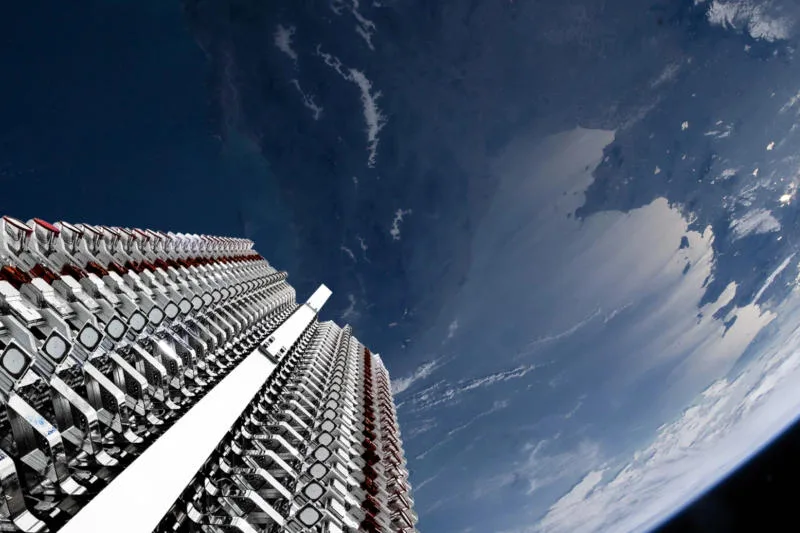
The rapid escalation of computing demands driven by the next generation of artificial intelligence agents is prompting some technology companies to explore deploying data centers beyond Earth’s surface. However, a recent analysis by Wood Mackenzie warns that unless launch costs can be significantly reduced, space-based data centers may end up costing roughly three times more than their terrestrial counterparts.
Emerging AI models are expected to require an extraordinary increase in computational resources, with estimates suggesting they may need anywhere from 10,000 to 40,000 times more processing capacity per task compared to today’s advanced chatbots. This profound jump in demand has prompted industry players to consider unconventional solutions, including infrastructure hosted in orbit.
Space data centers offer several theoretical advantages such as reduced latency for satellite communications, enhanced cooling efficiency due to the vacuum environment, and potential access to renewable solar energy. However, these benefits come with a significant economic hurdle primarily related to the cost of transporting massive hardware payloads into orbit.
Wood Mackenzie’s report highlights that, without innovation in launch technologies and cost reductions, the financial outlay for deploying and maintaining data centers in space will remain substantially higher than traditional land-based facilities. This includes expenses for launch vehicles, on-orbit deployment, and maintenance logistics, which collectively inflate operational budgets.
The current space launch market is undergoing transformations with reusable rockets and competitive providers offering gradual improvements in price points. Yet, the report implies these advancements, while helpful, are not yet adequate to make space data centers broadly cost-competitive. Achieving breakthrough cost efficiency in launch processes will be pivotal for the viability of these orbital infrastructures.
Additionally, the report notes that further challenges span across system reliability, radiation hardening, and energy management in harsh space environments—factors that add complexity and cost to designing data centers for orbital deployment.
As AI continues to push the boundaries of computational intensity, tech companies must balance between scaling terrestrial data centers and experimenting with space-based solutions. For now, space remains an intriguing but costly frontier for cloud computing expansion, closely tied to the pace of innovation in launch economics and space technology.
Next-gen AI could demand vastly more computing power, driving interest in space data centers that remain costly without cheaper launch solutions.