App Store Sees Surge in New Apps Amid Growth of No-Code Platforms in Early 2026
July 21, 2026
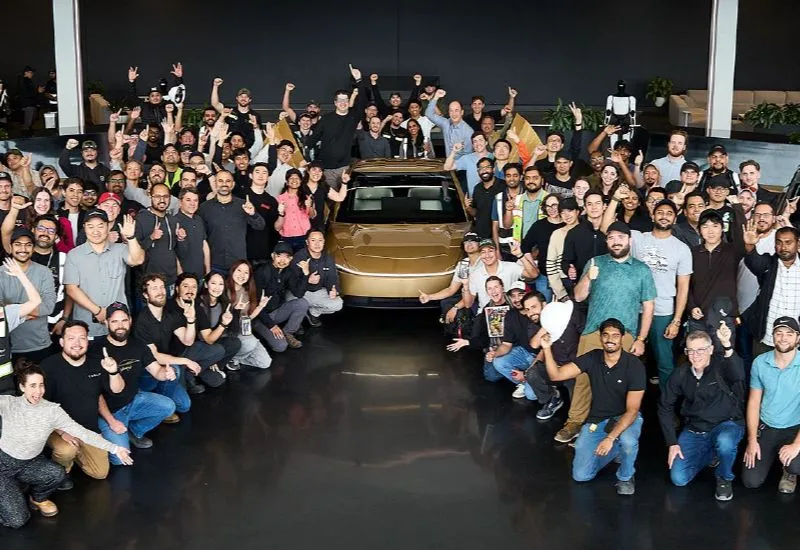
Tesla has officially commenced production of its highly anticipated Cybercab, an autonomous taxi without a steering wheel or pedals. The announcement came from CEO Elon Musk shortly after Tesla released its latest quarterly financial report, confirming the shift toward fully driverless electric taxis in the company’s fleet.
The Cybercab, a two-passenger vehicle, was first introduced from the assembly line earlier this year in February. However, Musk refrained from announcing the start of mass production until recently, signaling confidence in the vehicle’s readiness for broader deployment.
The introduction of the Cybercab is set to gradually replace the Model Y crossovers currently used for similar ride-hailing purposes within Tesla’s ecosystem. Designed explicitly as a driverless taxi, the Cybercab eliminates traditional vehicle controls, reflecting Tesla’s goal of optimizing urban transportation with fully autonomous electric vehicles.
This initiative aligns with Tesla’s broader strategy to expand its presence in the autonomous vehicle market, building on developments in self-driving technologies and electric mobility. The streamlined design of the Cybercab offers a more specialized ride experience intended to enhance operational efficiency in robotaxi services.
While Tesla has not disclosed detailed specifications or pricing information related to the Cybercab’s commercial deployment, the shift marks a significant step forward in the evolution of the company’s autonomous vehicle lineup. By focusing on a dedicated driverless taxi, Tesla aims to increase the scalability and accessibility of its robotaxi service to customers.
The production of the Cybercab represents a milestone in Tesla’s pursuit of automated personal and public transportation solutions. As the company continues to refine self-driving systems, the Cybercab could become a key component in transforming ride services and reducing reliance on human drivers in urban settings.
Further updates regarding production volume, deployment timelines, and regional availability for the Tesla Cybercab are expected as the project progresses. Industry observers are watching closely to see how this new autonomous vehicle integrates into existing transportation networks and competes with other players in the burgeoning robotaxi market.
Tesla has launched production of its driverless Cybercab taxi, designed to gradually replace Model Y vehicles in its autonomous fleet.