Advancements in CFET Technology Promise Faster, Smaller, and More Reliable Semiconductor Transistors
July 21, 2026
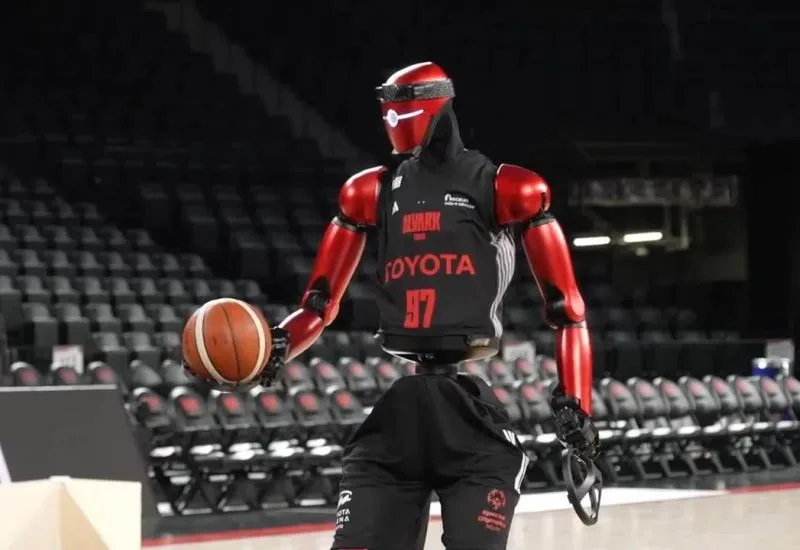
Toyota Motor Corporation has demonstrated a new generation of its wheel-based robot engineered to play basketball, marking significant advancements in robotic performance and precision. This latest prototype reflects the company’s ongoing dedication to developing robots that can operate in dynamic sports environments.
The project, which has persisted over several years, centers on creating robots capable of executing basketball tasks typically requiring human-like agility and skill, such as accurately shooting a basketball into a hoop. Unlike many efforts focused on humanoid robots, Toyota leverages a unique wheel-based design to enable swift and fluid movement across the court.
The new robotic system builds on Toyota’s previous iterations by enhancing its ability to navigate and interact with the basketball court environment efficiently. By integrating advanced control algorithms and sensors, the robot demonstrates improved accuracy in ball handling and shooting. These capabilities suggest progress toward practical deployment in training or entertainment settings that blend robotics and sports.
Although the enthusiasm for humanoid robots playing fast-paced sports is widespread across the tech community, Toyota’s emphasis on a wheeled robotic form presents an alternative approach. The design likely offers advantages in stability and speed that are challenging for bipedal robots to match at comparable levels of complexity.
This project aligns with broader trends in robotics and artificial intelligence, where companies explore diverse methods to achieve human-like dexterity and decision-making in machines. Toyota’s ongoing commitment to this specialized application reflects interest not only in entertainment but also in furthering automated systems that can adapt to unpredictable and fluid scenarios.
Details about the robot’s technical specifications, potential commercial applications, or public availability were not disclosed during the recent demonstrations. However, the visible improvements reinforce Toyota’s position as a key player in the robotics landscape, especially in the niche intersection of sports and autonomous machines.
While much of the robotics field focuses on humanoid designs, Toyota’s approach underscores the potential of alternative locomotion systems for specialized tasks. This development may influence future research directions that prioritize different morphologies tailored to specific functional requirements, such as high-speed mobility combined with precise object manipulation.
As robotics technology continues to evolve, projects like Toyota’s basketball robot offer valuable insights into the possibilities of machine performance in real-world, dynamic environments. Continued innovation in control systems, sensor integration, and mechanical design will be key to pushing these capabilities further in the coming years.
Toyota continues to push robotic innovation with a new generation of its wheel-based basketball-playing robot, highlighting precision and agility.