Oracle’s Debt Challenges Threaten AI Data Center Project for OpenAI
July 21, 2026
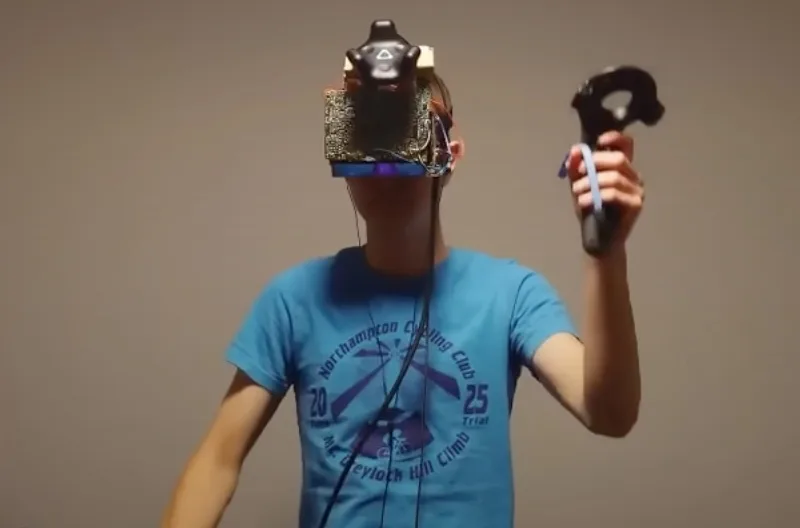
A technology enthusiast has crafted a virtual reality headset utilizing small cathode ray tube (CRT) monitors, a choice that has shown promising results in display clarity and comfort. The project was undertaken by a YouTube user known as dooglehead, who repurposed vintage CRT components to challenge conventional VR display technology.
Virtual reality headsets typically face visual limitations such as the screen-door effect, a grid-like pattern seen between pixels that can detract from immersion. Mainstream solutions often involve using ultra-high-resolution displays to minimize this distraction, but this comes with increased costs and technical complications.
In contrast, the DIY headset developed by dooglehead features a pair of 2.7-inch CRT monitors originally from Sony Watchman portable televisions. These models were produced between 1982 and 2000 and are notable for their analog display technology. By leveraging these CRTs, the builder avoided the pixel grid effect common in LCD and OLED VR panels without relying on extremely dense pixel matrices.
The smaller screen size of the CRTs and their inherent display characteristics appear to contribute to a smoother image without the visual noise of pixelation. This analog approach proves that alternative technologies can still provide unique advantages in immersive display design.
According to dooglehead, the headset was surprisingly comfortable to wear, a notable achievement given that CRT technology typically tends to be bulkier and heavier than modern flat panels. The compact monitors from the vintage handheld TVs helped maintain a manageable form factor for VR usage.
This project underscores ongoing experimentation within the VR community, where enthusiasts and engineers alike explore unconventional hardware to improve user experience. Utilizing legacy technology in innovative ways can inspire new design directions that differ from the high-cost, high-resolution trend dominating today’s VR market.
While this CRT-based VR headset project remains at the enthusiast level and specifics such as pricing, performance benchmarks, or commercial prospects were not disclosed, it demonstrates that inventive methods can circumvent certain technical hurdles. Alternatives to the dominant display technologies continue to attract interest for their potential to solve persistent VR challenges.
As the VR industry evolves, efforts like dooglehead’s highlight the viability of retro display technology in modern applications, offering a fresh perspective on virtual reality hardware development.
A VR enthusiast created a headset with small CRT displays, successfully eliminating screen-door effect without ultra-high-res panels.