Honor Launches X7e Smartphone in Russia Featuring 7200mAh Battery and AI Shortcut Button
July 21, 2026
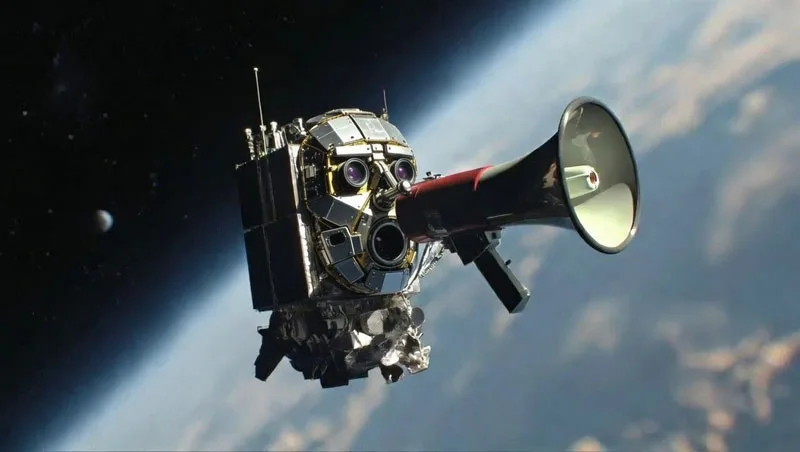
Boeing has introduced a new artificial intelligence system designed to transform raw satellite telemetry data into clear, understandable language for mission control teams. This development aims to address past challenges faced during spacecraft launches, notably the difficulties in interpreting complex telemetry information in real time.
The initiative comes in response to incidents encountered during early launches of Boeing’s Starliner spacecraft, where coding errors and misinterpretations of telemetry data contributed to mission setbacks. These complications delayed timely decision-making and complicated troubleshooting efforts for engineers on the ground.
By deploying a large language model (LLM) optimized for the limited computing resources available onboard satellites, Boeing enables the spacecraft to process telemetry and convey its status and anomalies in straightforward human language. This approach reduces the communication barrier between technical data streams and the mission support personnel who rely on accurate information to make critical decisions.
Telemetry provides essential information about a spacecraft’s systems, including propulsion, power, thermal conditions, and onboard instruments. Traditionally, mission control teams analyze telemetry through a combination of automated systems and manual interpretation by engineers trained to read and correlate the data. However, when telemetry is presented as complex code or encoded signals, rapid comprehension can be challenging, especially during high-pressure situations such as launches and docking maneuvers.
The newly developed AI translates telemetry outputs into accessible phrases that even those without extensive technical backgrounds can understand. This capability could streamline anomaly detection and response, improving safety and reliability in space operations.
Designing the LLM to operate on relatively low-power hardware onboard satellites ensures that explanations are available in real time without relying entirely on data transmission to Earth-based systems. This autonomous processing reduces latency and can facilitate quicker responses to urgent issues.
Boeing’s approach demonstrates an innovative application of advancements in natural language processing (NLP) and machine learning within aerospace technology. By bridging the gap between complex technical data and human comprehension, the company hopes to enhance mission success rates and build greater confidence in future spaceflights.
While specific details about the system’s deployment schedule or integration into upcoming missions have not been disclosed, this development signals a broader trend of integrating AI to support space exploration and satellite management.
Boeing has created an AI system that converts satellite telemetry data into human-readable language, aiding ground teams in mission analysis.