
Honor Launches X7e Smartphone in Russia Featuring 7200mAh Battery and AI Shortcut Button
July 21, 2026
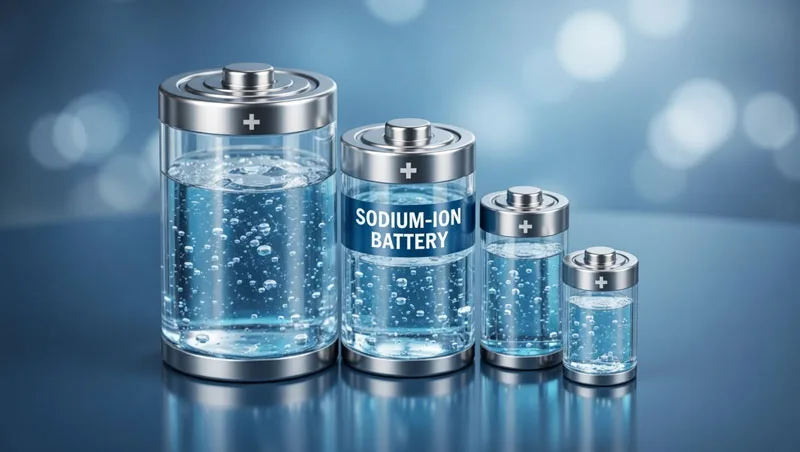
Researchers at the University of Surrey in England have achieved a significant advancement in sodium-ion battery technology by altering the way cathode materials are processed. Traditionally, sodium-vanadium oxide hydrate (NVOH) cathodes undergo a dehydration step involving heating to remove water, as it was believed that residual water compromised battery performance. However, the Surrey team took an unconventional approach by retaining the water content within the cathode material.
By maintaining the water molecules in the NVOH cathode, the researchers discovered a remarkable increase in energy storage capacity, nearly doubling the performance compared to the typical dehydrated form. This unexpected finding challenges long-standing assumptions about material preparation in sodium-ion batteries and opens new avenues for optimization.
Sodium-ion batteries have attracted considerable interest as a promising alternative to lithium-ion cells due to sodium’s abundance and lower cost. Yet, their widespread adoption has been limited by lower energy density and capacity relative to lithium-based technologies. The breakthrough at Surrey offers potentially transformative improvements that could enhance the viability of sodium-ion batteries for applications ranging from electric vehicles to grid energy storage.
The researchers’ approach simplifies the cathode manufacturing process by eliminating the need for high-temperature dehydration, which may also reduce production costs and energy consumption. While the detailed mechanisms behind the enhanced storage capacity are still under investigation, the retention of water molecules appears to play a crucial role in stabilizing the cathode structure and facilitating ion movement.
This development aligns with broader efforts in battery research aimed at improving sustainability and reducing reliance on scarce materials. As sodium-ion technology advances, innovations like Surrey’s hydrated cathode could contribute to the development of high-performance, cost-effective energy storage solutions essential for the transition to cleaner energy systems.
Further research and testing will be necessary to evaluate the long-term stability, scalability, and commercial potential of the hydrated NVOH cathode method. However, this discovery marks a notable milestone that could reshape material engineering strategies within the energy storage field.
Researchers at the University of Surrey uncovered a hydration-based cathode method that nearly doubles sodium-ion battery storage capacity.