Honor Launches X7e Smartphone in Russia Featuring 7200mAh Battery and AI Shortcut Button
July 21, 2026
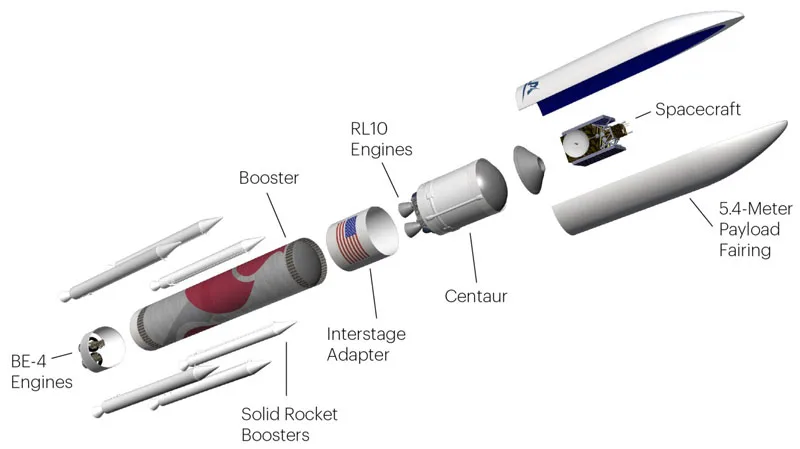
NASA’s revised approach to its lunar exploration program marks a significant shift in the agency’s Space Launch System (SLS) architecture. A planned engine upgrade, previously assigned to Boeing, has been scrapped in favor of adopting the Centaur V upper stage as a replacement. This move comes amid ongoing schedule pressures and cost challenges.
Recently, newly appointed NASA administrator Jared Isaacman unveiled an updated framework for the agency’s program aiming to land astronauts on the Moon, targeting mission completion by 2028. Central to this strategy was a new upper stage, the Exploration Upper Stage (EUS), designed and manufactured by Boeing to provide enhanced performance for the SLS rocket.
However, Boeing has not yet commenced production of the EUS component, and persistent schedule delays alongside an inflated budget have compromised its feasibility within the tightened timelines. Due to these complexities, NASA appears to have pivoted away from Boeing’s EUS in favor of adopting the Centaur V upper stage, which is expected to better align with the program’s accelerated schedule.
The Centaur series, well known for its reliability and long-standing use in U.S. space missions, offers NASA a mature and potentially more cost-effective solution for the SLS upper stage. The switch is designed to mitigate risks associated with developmental delays and financial overruns that have hampered the Boeing-led project.
This substitution is critical as the lunar surface touchdown represents an ambitious goal set largely in response to rising international competition, particularly from China. The shortened timeline underscores NASA’s urgency to advance domestic capabilities for sustainable lunar exploration ahead of its strategic rivals.
With the Centaur V upper stage slated to replace Boeing’s EUS, NASA repositions its technical and operational focus to adhere to the 2028 lunar landing schedule. Additional implementation details, including exact timelines and production schedules for Centaur V within the SLS program, have not been publicly disclosed.
NASA’s move highlights the challenges faced by contractors in delivering cutting-edge space hardware within constrained timeframes and budgets, especially in projects pivotal for national space exploration objectives. The decision to move forward with Centaur V reflects a pragmatic approach to maintaining momentum in the Artemis campaign while managing developmental risks.
Amid delays and budget overruns, NASA swaps Boeing’s SLS upper stage for Centaur V to meet accelerated lunar landing target by 2028.