Popular PC Components in Russia Highlight Nvidia RTX 50 Series and 1TB NVMe SSDs
July 21, 2026
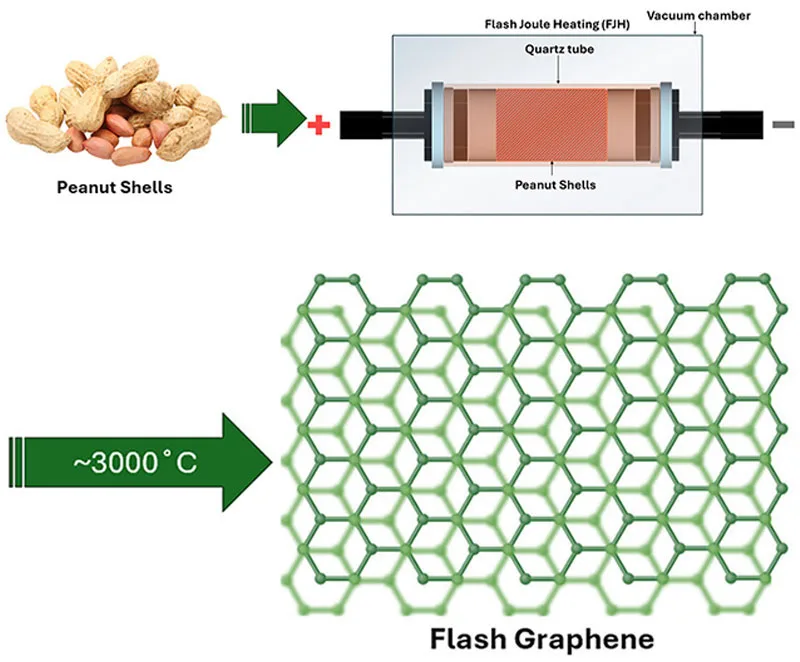
Researchers from the University of New South Wales (UNSW) have introduced a novel and energy-efficient technique for transforming agricultural waste from peanut shell processing into a material closely resembling graphene. This advancement could open new pathways for sustainable material production in emerging electronic technologies.
Each year, more than 10 million tons of peanut shell waste are generated globally. Traditionally, these byproducts are discarded, burned, or composted, which represents a lost opportunity for resource utilization. The UNSW team’s method leverages this abundant, low-cost biomass to fabricate a graphene-like substance with promising properties.
Graphene, a single layer of carbon atoms arranged in a hexagonal lattice, is widely regarded as a revolutionary material due to its exceptional electrical conductivity, mechanical strength, and thermal properties. However, conventional production methods often involve expensive and complex processes. The conversion of peanut shell waste into a similar carbon-based material provides an innovative, more sustainable approach to meet increasing demands in electronics and other industries.
The newly developed process is characterized by its energy efficiency, making it potentially scalable for industrial applications. By utilizing peanut shells, the researchers also address environmental concerns linked to agricultural waste management, effectively turning a problematic residue into a valuable resource.
This breakthrough aligns with growing efforts in the tech and materials science sectors to explore renewable and eco-friendly sources for advanced materials. It is anticipated that such innovations could contribute to reducing the carbon footprint of electronic device manufacturing while supplying the industry with alternative raw materials that do not rely on limited natural resources.
While detailed specifications, commercial viability, and market readiness remain to be further explored, this discovery marks an important step toward integrating sustainable practices into high-tech material fabrication.
Scientists at UNSW have created an energy-efficient method to convert peanut shell waste into a graphene-like material with potential for future electronics.