
Honor Launches X7e Smartphone in Russia Featuring 7200mAh Battery and AI Shortcut Button
July 21, 2026
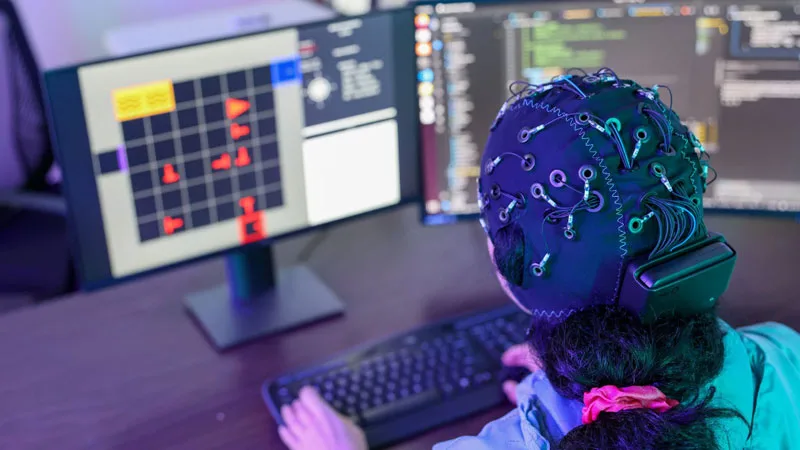
Researchers at Oklahoma State University have pioneered a neuroadaptive control system that leverages brain signals to enhance the responsiveness of robots in detecting operator mistakes. This breakthrough enables semi-autonomous robotic platforms to halt erroneous operations almost instantaneously, potentially outpacing human reaction times.
When individuals recognize errors, certain distinct neural signals emerge in the cerebral cortex. The university’s research team has successfully captured these signals to function as immediate “stop” commands for robots, bypassing the traditional communication routes between operator and machine. This direct interaction between human brain activity and robotic control allows for quicker intervention during flawed task execution.
Current semi-autonomous robotic systems often rely on operators to manually correct mistakes through conventional input devices or verbal commands, causing delays. Integrating the neural feedback mechanism significantly reduces this latency, enabling the robot to prevent further errors without awaiting explicit instructions.
The approach involves monitoring brain activity patterns that correlate specifically with the operator’s awareness of mistakes, thereby providing a real-time signal that triggers robot response protocols. By doing so, the system enhances safety and efficiency in environments where human-robot collaboration is crucial.
This advancement not only opens new possibilities for improving error management in robotic systems but also represents a step forward in human-machine interfacing technology. While development continues, the innovation promises applications in various fields including manufacturing, remote operations, and assistive robotics where rapid error detection and response are critical.
Details regarding the system’s deployment timeline, commercial availability, or integration with existing robotic platforms have not been disclosed.
A new brain-computer interface enables robots to detect and react to operator errors faster than human reflexes in semi-autonomous systems.