
Oracle’s Debt Challenges Threaten AI Data Center Project for OpenAI
July 21, 2026
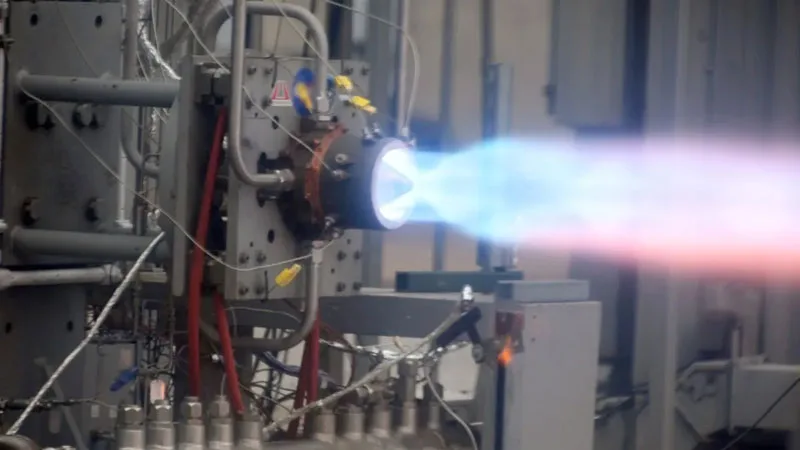
Astrobotic, a US-based aerospace company, has announced the successful completion of testing for its advanced rocket engine known as Chakram. This engine represents a significant development in the realm of rotating detonation rocket engines (RDREs), a cutting-edge technology in rocket propulsion.
The Chakram engine operates on the principle of rotating detonation, where a detonation wave moves continuously at supersonic speeds around the circular combustion chamber. Unlike conventional rocket engines that rely on deflagration, RDREs harness the energy of detonation waves, which has the potential to improve efficiency and performance significantly.
This testing milestone highlights progress in the pursuit of hypersonic propulsion systems, which are central to the development of next-generation rockets and spaceplanes capable of sustaining flight at speeds exceeding Mach 5.
Rotating detonation technology is recognized for offering a promising pathway to more compact, powerful, and fuel-efficient rocket engines. The continuous detonation wave in the combustion chamber creates an intense and steady pressure environment, which can translate into higher thrust output.
Astrobotic’s achievement with the Chakram engine positions the company at the forefront of this emerging propulsion field. While specific technical details and development timelines remain limited publicly, the successful test series suggests the engine has met key performance targets in controlled conditions.
The implications of this advancement are substantial for aerospace applications, including space exploration missions and hypersonic flight vehicles. Efficient and reliable high-speed propulsion engines are crucial for expanding capabilities in both suborbital and orbital operations.
As research into RDREs continues, the technology could redefine performance standards for rockets by providing improved thrust-to-weight ratios and enhanced fuel efficiency compared to traditional propulsion methods.
Astrobotic’s strides with the Chakram engine reaffirm ongoing efforts within the aerospace industry to innovate propulsion technologies that support rapid and cost-effective access to space.
Astrobotic has completed successful tests of its Chakram rotating detonation rocket engine, marking progress in hypersonic propulsion technology.