Oracle’s Debt Challenges Threaten AI Data Center Project for OpenAI
July 21, 2026
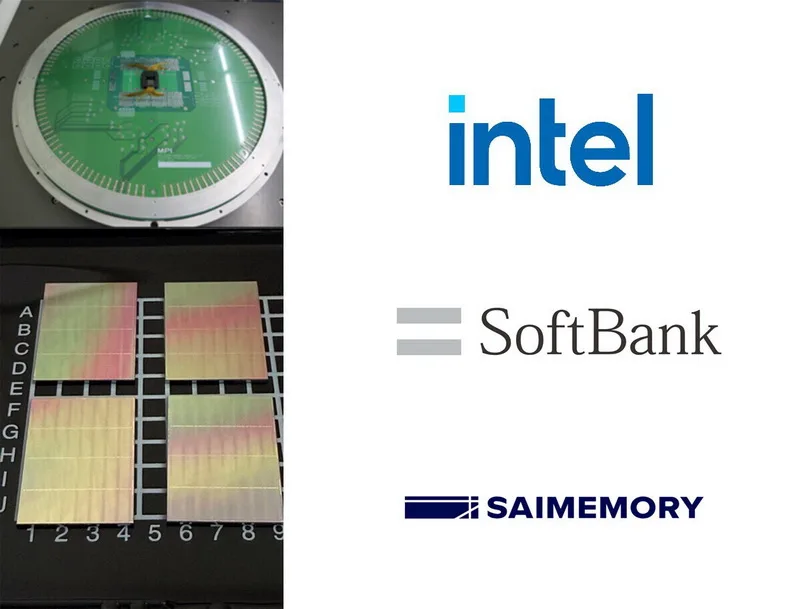
Intel, in collaboration with SoftBank and Tokyo University, is advancing a new high-bandwidth memory technology designed to exceed the performance of the widely used High Bandwidth Memory (HBM) standard. The initiative is spearheaded by a startup named Saimemory, formed through this partnership to tackle the growing need for faster memory solutions in powerful artificial intelligence (AI) accelerators.
HBM has long served as the go-to memory technology for stacked memory configurations in high-performance computing and AI workloads. However, as AI models continue to expand in size and computational demands, the limitations of current memory bandwidth have become increasingly apparent. The HB3DM technology aims to address this gap by providing enhanced data transfer rates beyond what traditional HBM stacks offer.
Though specific technical details about HB3DM have not been fully disclosed, the approach is intended to surpass existing bandwidth barriers, thereby enabling AI accelerators to handle more data input and output efficiently. This advancement could potentially elevate the overall throughput and performance of next-generation AI hardware platforms that rely heavily on fast memory access.
Saimemory’s formation indicates a strategic collaboration: Intel contributes its semiconductor expertise, while SoftBank and Tokyo University bring additional resources and research capabilities. This fusion of industry and academia underscores the growing importance of developing innovative memory technologies that can keep pace with rapid AI computational growth.
The emergence of HB3DM suggests a significant step forward in memory stacking technologies, pushing beyond the capabilities of traditional HBM standards. By focusing on increased bandwidth, the new memory solution could help reduce bottlenecks encountered in processing complex AI workloads and data-centric applications.
As AI accelerators become more integral to various sectors including cloud computing, autonomous systems, and scientific research, advances in memory architecture remain critical. Solutions like HB3DM are poised to play a vital role in shaping the future landscape of AI hardware.
While additional information, such as commercial availability and pricing, has yet to be announced, the development of HB3DM signals an important milestone for memory technology innovation led by Intel and its partners.
Intel and partners introduce HB3DM memory technology promising higher bandwidth than HBM for AI accelerator memory stacks.