Oracle’s Debt Challenges Threaten AI Data Center Project for OpenAI
July 21, 2026
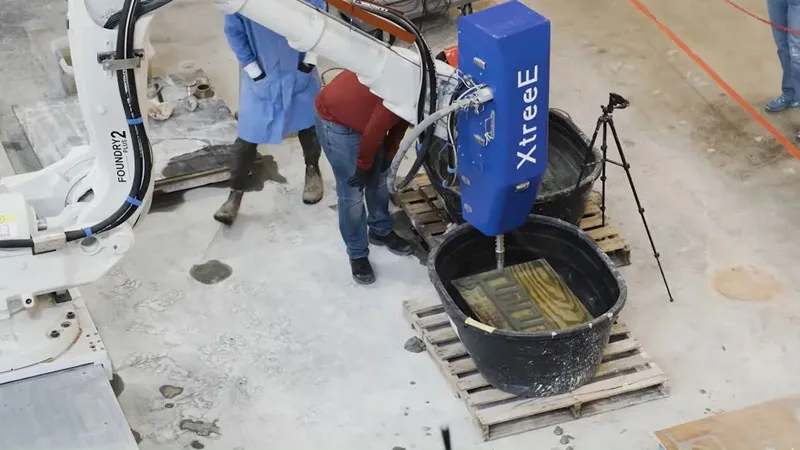
Scientists at Cornell University have pioneered a new 3D printing technology capable of producing concrete structures directly on the seafloor. This development is intended to streamline underwater construction and repair of ocean infrastructure, addressing long-standing challenges in marine engineering.
The project, backed by the Defense Advanced Research Projects Agency (DARPA), seeks to reduce the time and financial resources typically required for underwater building tasks. Current methods often involve complex logistics and have significant impacts on marine ecosystems, creating a pressing need for more efficient and environmentally considerate solutions.
Traditional underwater construction frequently depends on costly and time-intensive operations such as deploying divers and specialized equipment, procedures that can disturb delicate ocean habitats. Cornell’s underwater 3D printer offers a promising alternative by enabling automated fabrication of concrete components in situ on the ocean floor. This capability could enhance the maintenance and expansion of subsea structures, including pipelines, habitats, and other maritime installations.
By printing concrete underwater, the technology eliminates the need to transport prefabricated elements from surface vessels or coastal facilities, minimizing operational complexity and potential environmental disruption. It aims to accelerate construction timelines while lowering the risk to human operators involved in challenging underwater environments.
This innovation may prove critical as demand grows for resilient underwater infrastructure supporting energy, communication, and defense sectors. While specific deployment scenarios and commercial applications have yet to be detailed, the ongoing research signifies a transformative step toward integrating advanced manufacturing processes with marine engineering requirements.
The Cornell-developed 3D printer reflects a broader trend of applying additive manufacturing technologies in unconventional and extreme conditions. Success in this domain could encourage further exploration of automated construction systems capable of operating in harsh and remote settings beyond traditional land-based applications.
Despite the promise, important considerations remain regarding the long-term durability of printed materials in underwater environments and the system’s adaptability to diverse geological and oceanographic conditions. Further testing and refinement will be essential to validate the technology’s practical benefits and environmental impact.
Overall, this underwater 3D printing innovation is positioned to redefine how oceanic structures are built and maintained, potentially enabling faster, safer, and more cost-effective operations while lessening harm to marine ecosystems.
Cornell researchers create underwater 3D printing tech to build concrete structures on the seafloor, aiming to improve ocean construction speed and cost.