Google Collaborates with Samsung on Next-Gen AI Chip Component Manufacturing
June 11, 2026
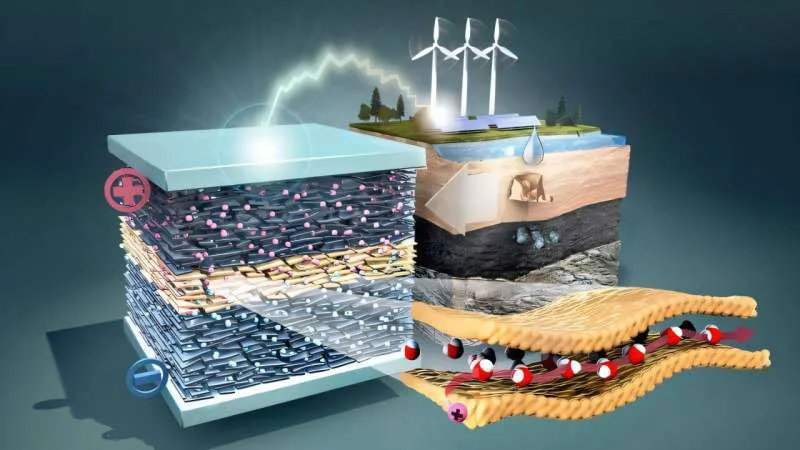
In a breakthrough that could reshape energy storage technology, researchers from Germany have engineered a supercapacitor made from an unconventional mix of water, clay, and graphene. This novel approach targets a core challenge for modern electrical systems: developing affordable, efficient, and scalable energy storage solutions.
Supercapacitors have become critical components within the infrastructure of societies dependent on electricity. Unlike conventional batteries, which rely on chemical reactions, supercapacitors store energy electrostatically, allowing for rapid charge and discharge cycles. This capability makes them invaluable for tasks such as stabilizing power grids, supporting regenerative braking in electric motors, and providing backup power for less demanding electronic devices and memory systems.
The widespread integration of supercapacitors into various applications faces a significant bottleneck: cost. High production expenses and material limitations have traditionally hindered their mass adoption. The German research team’s innovation offers a promising avenue to overcome these obstacles by utilizing readily available and inexpensive materials.
The newly developed supercapacitor employs a composite of water, natural clay, and graphene, a carbon-based material renowned for its extraordinary electrical conductivity and strength. By combining these materials, the researchers crafted a supercapacitor electrode that balances cost, environmental impact, and performance.
The use of water as a component suggests an environmentally benign electrolyte, while clay contributes to structural stability and affordability. Graphene’s inclusion ensures efficient charge transfer and enhances overall device conductivity. This combination results in a device that can potentially be produced at a fraction of the cost of existing technologies without compromising crucial functional properties.
Such supercapacitors could alleviate the pressure on electric grids by serving as buffering units that replace or supplement traditional backup generators. Their rapid energy cycling capabilities also make them suitable for energy recuperation systems, for instance, recovering kinetic energy in electric vehicles and industrial machinery. Furthermore, they could offer a low-cost solution for providing emergency power to sensitive electronics and memory devices during brief outages.
The research highlights the importance of material innovation in addressing global energy challenges. By leveraging abundant, low-cost substances rather than relying solely on advanced synthetic materials, this development points toward a scalable and sustainable path for future energy storage technologies.
While detailed technical specifications and commercial plans have yet to be disclosed, this discovery represents a significant stride toward democratizing access to supercapacitor technology. Continued efforts in this area may accelerate the integration of renewable energy systems, enhance grid stability, and expand the deployment of electric transportation and portable electronics.
German scientists create a supercapacitor from water, clay, and graphene, promising affordable energy storage for widespread electrical applications.