
Sony Calms Backlash Over End of Disc Releases with Classic Call of Duty Ports
July 11, 2026
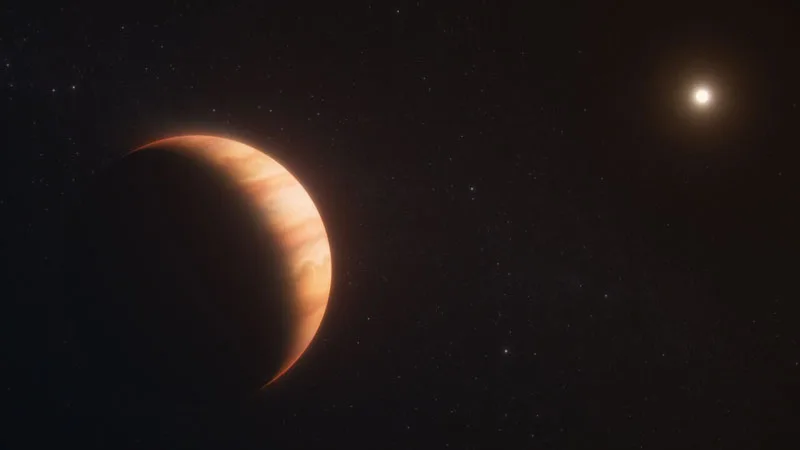
The James Webb Space Telescope (JWST) has achieved a groundbreaking observation, offering the first detailed study of the atmosphere of a giant exoplanet orbiting a white dwarf star. This stellar remnant represents a late stage in a star’s life cycle, having already passed through the red giant phase.
This particular exoplanet presents several astrophysical puzzles. Its current orbit places it unexpectedly close to a white dwarf, a position where planetary formation theories typically would not predict such a body to reside. Furthermore, its atmospheric temperature is significantly higher than what would be anticipated given the reduced luminosity of the host star after its transition to a white dwarf.
The observations mark a milestone as this is the first known exoplanet confirmed to have outlived the dramatic death of its parent star. The survival and characteristics of the planet challenge existing models of planetary system evolution in the aftermath of stellar death.
Researchers have long sought to understand how planetary bodies behave during and after the transformative phases of their stars, such as the expansion into a red giant and the subsequent collapse into a white dwarf. This study provides rare empirical data, showing that giant planets can endure these transitions and maintain significant atmospheres despite the star’s diminished energy output.
The JWST’s advanced instruments allowed scientists to analyze the atmospheric components and temperature profiles with unprecedented precision. These insights are poised to refine theoretical frameworks related to planetary atmospheres under extreme conditions.
The discovery underscores the ongoing capabilities of the James Webb Space Telescope to unlock new dimensions of knowledge about the universe, particularly in the field of exoplanetary science. As more such observations are conducted, the understanding of planetary system lifecycles and stellar remnants is expected to deepen significantly.
The James Webb Space Telescope has revealed new details about an exoplanet orbiting a white dwarf, challenging existing theories about planetary survival.