
Astronomers Identify First Double Star System Where Both Stars Exploded as Supernovae
July 21, 2026
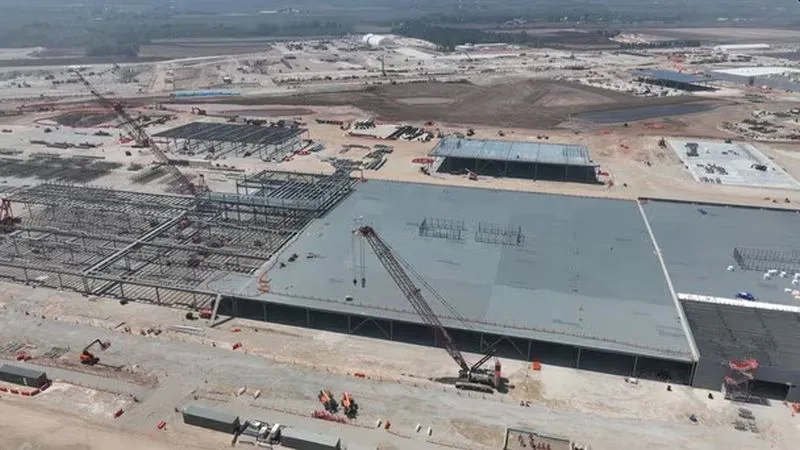
Oracle Corporation, a prominent player in cloud infrastructure and enterprise technology, is reportedly encountering significant financial obstacles that could impact its role in advancing artificial intelligence (AI) infrastructure in the United States. The company has been actively positioning itself as a key collaborator with OpenAI, aiming to develop and operate a large-scale AI data center to enhance computational capabilities for AI workloads.
Oracle’s initiative to construct a new AI-focused data center aligned with OpenAI’s needs faces serious setbacks due to mounting debt pressures. The company’s deteriorating credit rating has raised concerns among lenders and financial partners, resulting in demands for additional financial guarantees. These requirements have slowed down progress on the project, casting uncertainty over Oracle’s ability to fulfill its commitments on the infrastructure front.
The AI boom has driven many technology firms to rapidly expand their data center capacities, especially to support machine learning models requiring extensive computing power. Oracle’s entry into this domain with OpenAI signals its strategic intent to capitalize on the growing demand for AI infrastructure. However, the current financial environment and Oracle’s leverage levels appear to be limiting factors in executing these expansion plans smoothly.
While Oracle has made substantial investments in cloud services, database solutions, and AI technologies, its current debt profile is prompting caution among the company’s stakeholders. The need for additional financial assurances for the data center construction could lead to delayed timelines or strategic reassessments regarding the scale or scope of the project.
This development might have broader implications for OpenAI as well since the availability and reliability of advanced computational infrastructure are critical to supporting its AI research and deployment. Delays in securing suitable facilities could potentially affect OpenAI’s capacity to scale and optimize its AI models efficiently.
Details regarding the financial arrangements, project timeline adjustments, or alternative plans have not been disclosed. Industry observers will be watching closely to see how Oracle navigates this challenge and what impact it may have on the broader AI infrastructure landscape in the US.
Overall, Oracle’s case highlights the complexities and financial risks involved in the rapidly evolving AI infrastructure race. Companies are balancing aggressive growth targets with financial health considerations amid increasing capital requirements for state-of-the-art AI computing environments.
Oracle’s high debt load is delaying the construction of a new AI data center in the US meant to support OpenAI’s infrastructure.