Intel Plans to Reintroduce Hyper-Threading Technology in Coral Rapids CPUs by 2028
July 25, 2026
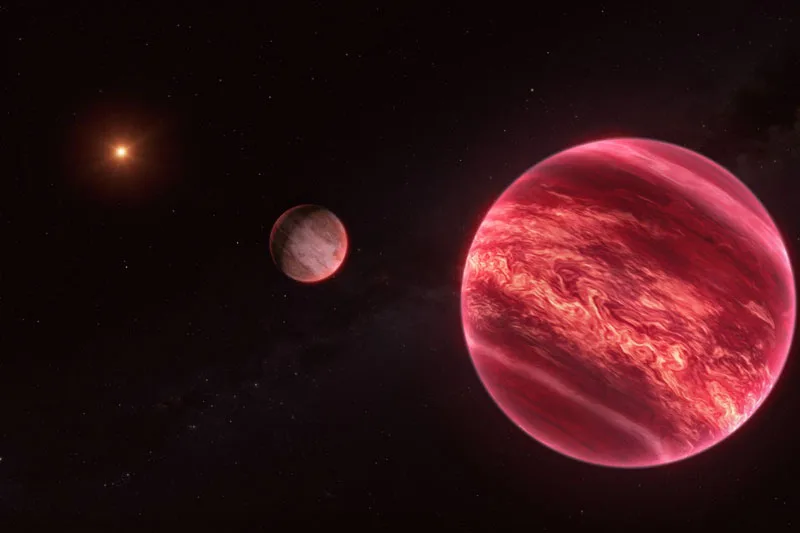
Astronomers have achieved a significant milestone by confirming the first definitive detection of a moon orbiting a planet outside the Solar System. This discovery not only adds a new dimension to the understanding of distant planetary systems but also advances the study of celestial evolution beyond our immediate cosmic neighborhood.
Moons have been a subject of fascination both scientifically and visually, as they contribute to the dynamics and natural beauty of their planetary environments. Until now, while several potential exomoon candidates had been identified, none had been verified with the level of certainty necessary to be considered a confirmed discovery. The latest findings bring the scientific community closer to establishing exomoons as real, observable bodies in distant star systems.
Understanding moons around exoplanets is critical for several reasons. These natural satellites can influence their host planets’ atmospheres, climates, and potential habitability. Additionally, the presence of moons helps scientists trace the history and development of planetary systems, offering clues about their formation and stability.
The confirmed exomoon presents features that distinguish it from the Earth’s Moon, indicating the diverse nature of moons throughout the galaxy. This diversity in satellite characteristics is essential for refining models of planetary science and exploring how different stellar environments shape planetary systems.
The journey towards this discovery involved sophisticated observation techniques and the analysis of subtle gravitational interactions between planets and their moons. These methods have been continuously refined, enabling astronomers to detect the faintest signals indicating the presence of moons beyond our Solar System.
While further research is necessary to explore the properties and implications of this exomoon fully, its confirmation marks an important step forward. This breakthrough is poised to inspire more detailed investigations and may pave the way for identifying additional exomoons in the future.
The detection also supports the broader quest to understand how common moons are in the universe and their role in shaping the conditions of planets they accompany. As observational technology advances, scientists anticipate that a growing catalog of exomoons will enrich the knowledge of solar and extrasolar celestial landscapes alike.
For the first time, scientists have confirmed the existence of a moon orbiting a planet outside our solar system, marking a breakthrough in exoplanetary studies.