
Popular PC Components in Russia Highlight Nvidia RTX 50 Series and 1TB NVMe SSDs
July 21, 2026
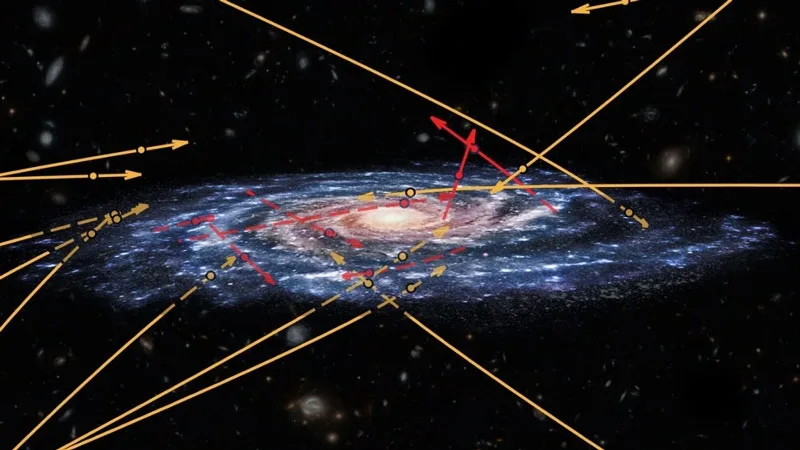
Runaway stars, celestial bodies moving freely through space without gravitational ties to star clusters, have intrigued astronomers for decades. Characterized by their high velocities, some of these stars even exceed escape velocity thresholds, allowing them to leave their home galaxies entirely.
Since their discovery nearly 60 years ago, runaway stars have prompted various hypotheses regarding their origins. Traditionally, scientists believed that these high-speed stars were ejected from star clusters through gravitational interactions or binary star disruptions. However, a recent comprehensive study has called several aspects of these prevailing theories into question, offering fresh insights into the mechanisms behind their formation.
The investigation concentrated on a broad sample of runaway stars, analyzing their trajectories and velocities with unprecedented detail. Researchers identified that while some stars do achieve speeds greater than 700 kilometers per second, sufficient to escape their galactic confines, the processes responsible for these dynamics are more complex than previously understood.
Prior models often centered around two major runaway mechanisms: dynamical ejection resulting from close encounters within dense stellar environments, and the supernova explosion of a companion star in a binary system. The recent findings suggest additional factors may influence the prevalence and velocity distribution of runaway stars, challenging the notion that these classical scenarios are solely responsible for their existence.
Moreover, the study highlights the importance of considering a star’s environment both within and beyond the host galaxy to grasp its full evolutionary path. The diverse characteristics among runaway stars imply a range of ejection mechanisms, some of which require further exploration to comprehend.
Understanding runaway stars is crucial, as their trajectories can impact galactic evolution and the distribution of elements through the interstellar medium. The recognition that previous hypotheses might need revision opens new avenues for theoretical modeling and observational strategies in stellar astrophysics.
While these findings mark a significant advancement, researchers emphasize the need for continued data collection and analysis, particularly using next-generation space telescopes and astrometric surveys. This approach will enhance the precision in mapping star motions, shedding more light on the complex journey of these cosmic wanderers.
As the technical capabilities of astronomy develop, the study of runaway stars stands to gain a more comprehensive framework, reshaping how the scientific community perceives their role within the vast cosmos.
A recent large-scale study redefines the understanding of runaway stars, shaking up previous theories about their origins and behaviors.