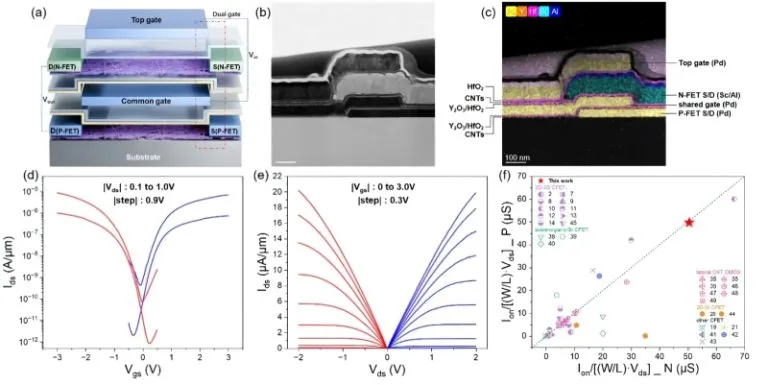
Advancements in CFET Technology Promise Faster, Smaller, and More Reliable Semiconductor Transistors
July 21, 2026
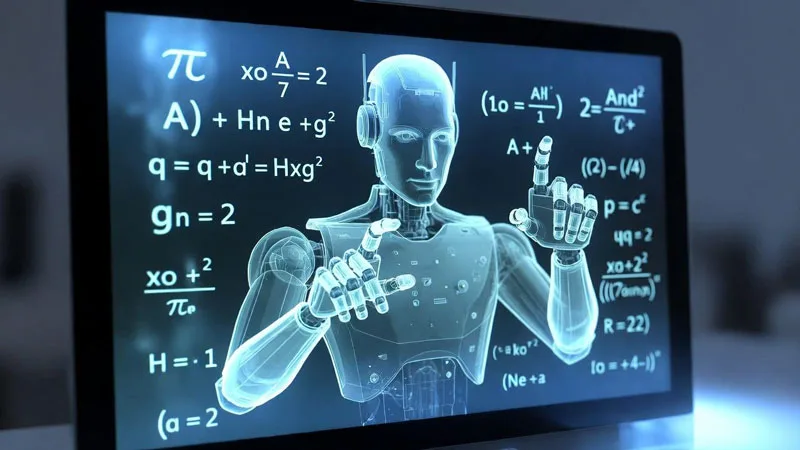
Nearly a century ago, physicists encountered a formidable computational challenge when attempting to analyze elementary particle behavior at the atomic scale. This problem centered around calculating configuration integrals, which are essential for understanding the thermodynamic and mechanical properties of materials. The sheer complexity arising from the vast number of particles and interaction conditions rendered these calculations practically unsolvable within any realistic timeframe.
The difficulty was so profound that it called into question the very possibility of obtaining exact solutions before the end of the universe’s lifetime. For decades, this barrier limited progress in precise material analysis and theoretical physics, forcing scientists to rely on approximations and simplified models.
Recently, a team of researchers leveraged advanced artificial intelligence techniques, notably a system known as THOR, to drastically accelerate the calculation of these integrals. The AI-driven approach achieved a speed increase of 400 times compared to traditional computational methods, marking a significant leap forward in addressing the problem.
By effectively managing the immense complexity of particle interactions and configuration spaces, the AI model enables more accurate and timely analysis of atomic-level material properties. This breakthrough paves the way for improved understanding of thermodynamics and mechanics in various materials, potentially impacting fields such as condensed matter physics, materials engineering, and nanotechnology.
The successful application of AI to this long-standing physics challenge showcases the growing role of machine learning and intelligent systems in accelerating scientific discovery. It moves beyond conventional computing limits, providing researchers with powerful new tools to tackle previously intractable problems.
While further validation and application of this approach are anticipated, the initial results signal a promising convergence of artificial intelligence and fundamental physics. The breakthrough may unlock new pathways for exploring the atomic world with precision and efficiency that were once thought to be out of reach.
A longstanding physics challenge involving complex integrals has been accelerated 400-fold thanks to AI, advancing material property analysis.