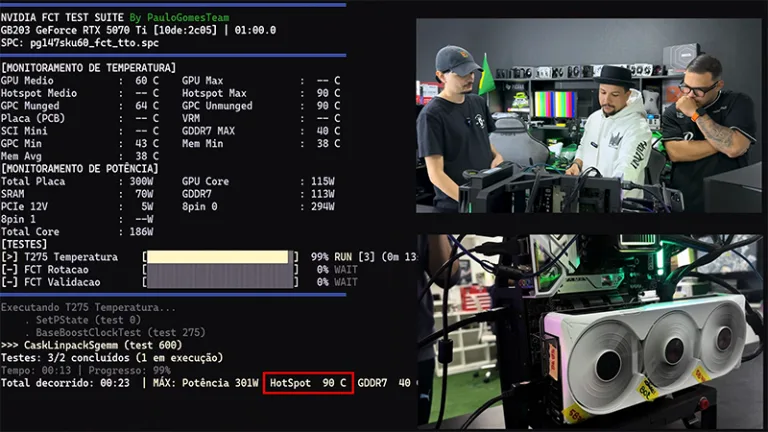
Nvidia GPUs Can Report Individual GDDR6 and GDDR6X Memory Chip Temperatures, Enthusiasts Discover
July 19, 2026
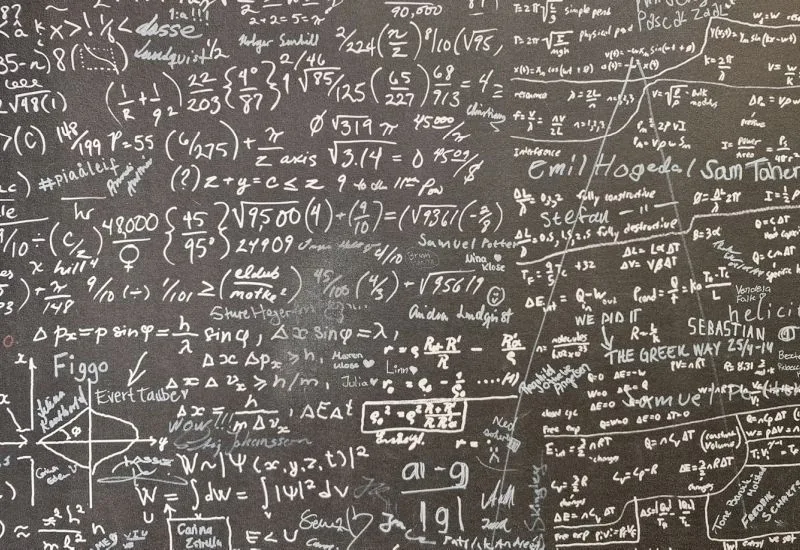
Artificial intelligence systems have traditionally been designed to address tasks within the humanities, including language understanding and social sciences. However, a growing number of AI developers are now prioritizing the ability of these models to solve complex mathematical problems.
One of the key motivations behind this shift is the recognition that AI can significantly contribute to scientific advancements. Mathematical problem solving serves as a foundational aspect of many scientific disciplines, and progress in this area could unlock further discoveries across various fields of research.
Moreover, the outcomes achieved through mathematical reasoning are often more objective and measurable compared to those in purely linguistic or creative domains. As a result, demonstrating AI’s success in solving mathematical problems provides a clear and concrete benchmark for evaluating the capabilities of these systems.
The expansion into mathematical tasks represents an evolving approach in AI development. While earlier models primarily focused on understanding and generating human language or processing images, the incorporation of mathematical reasoning abilities widens their application scope and potential impact.
This trend also reflects a broader recognition within the AI community of the value of integrating computational precision and logical reasoning into AI architectures. By equipping AI with enhanced mathematical capabilities, developers aim to improve performance not only in theoretical research but also in practical applications that demand exact calculations or problem-solving skills.
As artificial intelligence continues to mature, embracing the challenges of mathematical problems is expected to shape future innovations and set new standards for the technological advancements AI can achieve. Such developments may also inspire new methodologies for assessing AI progress, moving beyond qualitative assessments to more quantifiable measures rooted in mathematical accuracy and solution quality.
In summary, focusing AI systems on mathematical problem solving signifies a strategic evolution in AI research and development. This approach not only supports scientific breakthroughs but also serves as a robust indicator of AI’s growing sophistication and reliability.
AI developers are increasingly focusing on enabling systems to solve mathematical problems, enhancing scientific progress and showcasing AI capabilities.