App Store Sees Surge in New Apps Amid Growth of No-Code Platforms in Early 2026
July 21, 2026
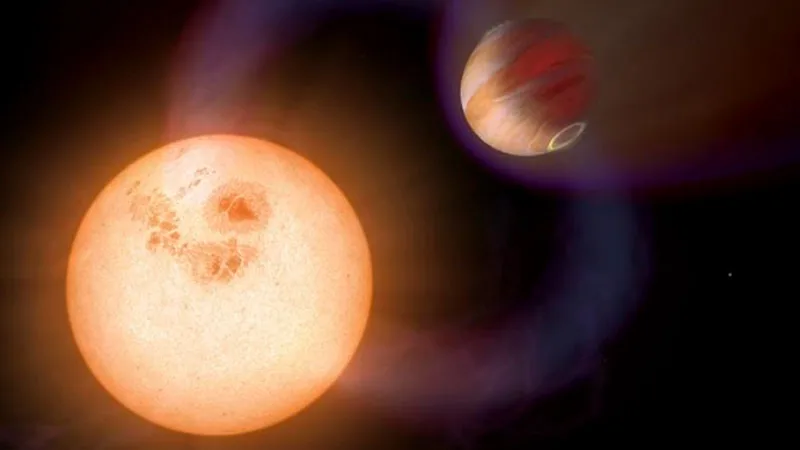
A team of scientists from the University of Warwick has developed an artificial intelligence model named RAVEN aimed at identifying potential exoplanets in astronomical observation data. This machine learning tool was applied to the extensive archives of the Transiting Exoplanet Survey Satellite (TESS), a space telescope designed to observe millions of stars and detect subtle variations in their brightness.
TESS operates by monitoring stars for periodic dips in light intensity, which often indicate a planet passing in front of the star relative to the observer. Detecting these events in the vast amount of data collected is a challenging and time-consuming task, traditionally done through manual or semi-automated methods.
The RAVEN model leverages advanced algorithms to process the light curves recorded by TESS with improved efficiency and sensitivity. By systematically analyzing brightness changes, the AI is able to isolate signals consistent with potential exoplanet transits that may have been overlooked or difficult to confirm using conventional approaches.
Applying RAVEN to TESS’s archival data, the researchers successfully identified a number of previously unrecognized exoplanet candidates. These findings demonstrate how AI can complement existing astronomical techniques by sifting through large datasets to reveal new insights about distant worlds.
The use of machine learning in the field of exoplanet discovery signifies a growing trend where AI aids in interpreting complex and voluminous data from space missions. While specific details about the newly found candidates or the scope of further validation were not disclosed, this advancement underscores the potential of AI-driven models in accelerating the pace of scientific discovery in astronomy.
Looking ahead, the RAVEN framework may be applied to ongoing and future astronomical datasets, enhancing humanity’s ability to locate and study planets beyond our solar system. This approach represents a promising integration of AI technologies in space research, providing a powerful tool for uncovering the mysteries hidden in star light.
Researchers employ AI to analyze TESS data, revealing new exoplanet candidates formerly hidden in stellar brightness records.