Memory Chip Makers Face Potential DRAM Oversupply by 2028 Amid Massive Capacity Expansions
July 20, 2026
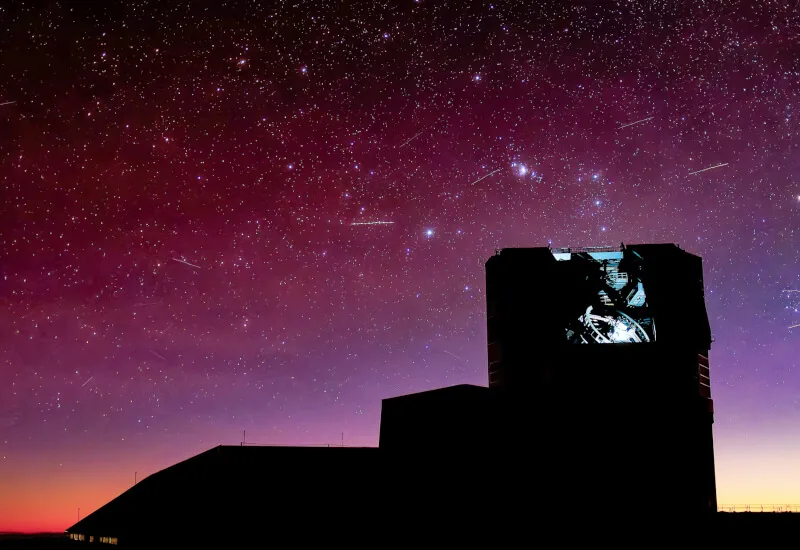
A team of scientists at Barcelona University has developed an artificial intelligence system called CIGaRS aimed at improving the calibration of Type Ia supernovae, often referred to as “standard candles” in cosmology. This advancement promises to enhance the precision of measuring the universe’s expansion, particularly refining our understanding of dark energy.
Type Ia supernovae serve as critical tools for gauging cosmic distances due to their consistent peak luminosity. However, recent findings indicate that these stellar explosions, which originate from white dwarf stars consuming their companions, exhibit more variability than previously believed. This heterogeneity has introduced uncertainties in standard calibration methods, subtly influencing estimates of dark energy’s effect on cosmic expansion.
The newly developed CIGaRS system approaches the calibration challenge by combining observational data from both the supernovae themselves and their host galaxies into a single, self-consistent model. This integrated framework accounts for variations that were previously unaddressed, allowing for more accurate corrections and interpretations.
Designed to handle the anticipated influx of supernova observations from the Vera C. Rubin Observatory, the AI model leverages advanced machine learning techniques to analyze large datasets efficiently. The observatory’s future data streams will likely contain millions of transient events, making automated, precise calibration methods essential for contemporary cosmological research.
The improved calibration enabled by CIGaRS not only reduces systematic errors but also promises to refine constraints on dark energy parameters, helping astronomers better comprehend the mysterious force driving the accelerated expansion of the universe.
Details of the research and the AI system’s methodology have been published in the journal Nature Astronomy, highlighting its potential role in the next generation of cosmological investigations.
Researchers introduce CIGaRS, an AI system refining Type Ia supernova calibration to improve understanding of cosmic expansion and dark energy.