App Store Sees Surge in New Apps Amid Growth of No-Code Platforms in Early 2026
July 21, 2026
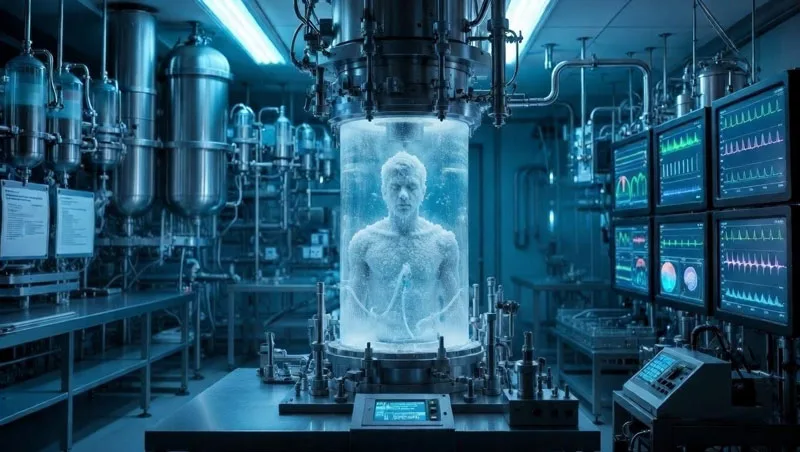
Scientists from Friedrich-Alexander University Erlangen-Nürnberg (FAU) and the University Hospital Erlangen have developed a pioneering technique to freeze and thaw brain tissue without causing cellular damage. This breakthrough has significant implications for the field of cryopreservation and brings the concept of safely preserving human brains closer to reality.
The new method relies on vitrification, an ultrafast cooling process that lowers the temperature of biological tissues to below –130 °C. Unlike traditional freezing, this technique transforms intracellular water into a glass-like state rather than allowing ice crystals to form. The formation of ice crystals within cells typically causes structural damage, making previous attempts at cryopreservation ineffective for delicate neural tissue.
By rapidly cooling the brain tissue to this glassy state, researchers have succeeded in minimizing physical disruption to cells. Subsequently, the tissue can be thawed without significant injury, preserving cellular integrity and function.
This advancement offers promising new avenues for long-term preservation of neural tissue, which could impact fields ranging from medical transplantation to neuroscience research and potentially—though still far from clinical application—the preservation of human brains for future revival.
While the exact protocols and potential clinical applications require further exploration, this research represents a critical step toward overcoming one of the most challenging obstacles in cryonics and tissue preservation: preventing irreversible damage during the freezing and thawing process.
The teams involved emphasize that despite this promising progress, more studies are necessary to fully understand the long-term effects of vitrification on complex biological systems. However, this achievement marks a formal advance in the scientific understanding of cryopreserving neural tissue without the destructive impact of ice crystallization.
Scientists develop a method to freeze and thaw brain tissue without damage, advancing the prospects of human cryopreservation.