SpaceX Shares to Join Nasdaq 100 Index Ahead of Schedule, Boosting Investor Access
June 27, 2026
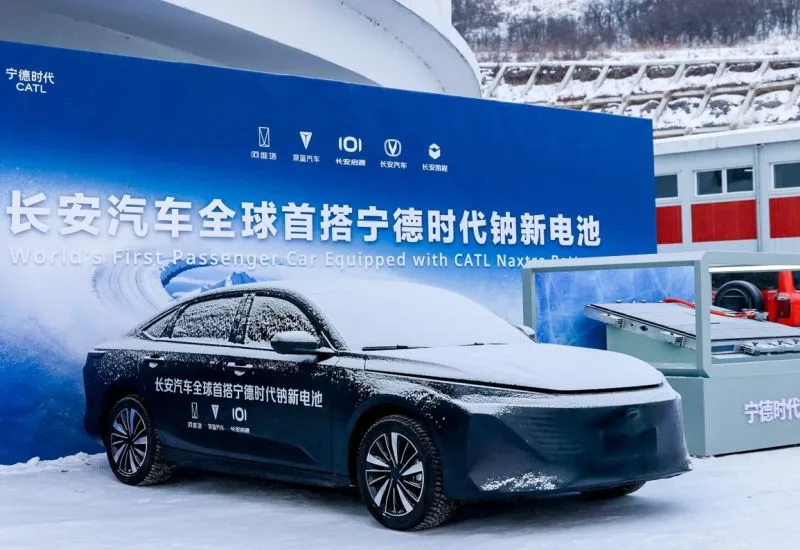
China’s competitive electric vehicle market has been rife with announcements hinting at the imminent arrival of next-generation battery technologies. However, the largest battery manufacturer, CATL, has issued a cautious outlook, indicating that mass adoption of sodium-ion and solid-state batteries in electric vehicles (EVs) remains several years away.
Current competition in the Chinese EV industry often sees manufacturers promoting advancements as just around the corner, aiming to captivate buyers with promises of improved range, safety, or cost-effectiveness through new battery chemistries. Despite this enthusiasm, CATL’s latest assessment sets more measured expectations, projecting widespread implementation of these emerging battery types will likely materialize only within three to five years, at the earliest.
Sodium-ion batteries and solid-state batteries represent two of the most promising advancements in EV energy storage. Sodium-ion batteries hold the potential to reduce reliance on costly and geopolitically sensitive raw materials such as lithium and cobalt. Meanwhile, solid-state batteries are expected to deliver enhanced energy density and improved safety profiles compared to conventional lithium-ion batteries, offering significant benefits for next-generation electric vehicles.
Nevertheless, the transition from laboratory breakthroughs and limited pilot production to reliable, large-scale manufacturing and commercial deployment involves overcoming substantial technical and economic hurdles. CATL’s position underscores the complexity of this endeavor, including challenges such as scaling production processes, ensuring lifecycle durability, and integrating new battery systems with existing EV platforms.
This timeline suggests that automakers and energy storage developers must continue to optimize current lithium-ion battery technologies while preparing gradually for the eventual integration of these more advanced chemistries. It also implies that consumers can expect incremental improvements in EV battery performance in the near term, rather than a sudden shift to radically new battery types.
As the largest player in the global battery market, CATL’s projections provide a significant industry benchmark, tempering market expectations and guiding stakeholders on realistic timelines for the adoption of sodium-ion and solid-state battery technologies.
The progression towards next-generation EV batteries remains a dynamic space influenced by ongoing research, supply chain developments, and policy frameworks. However, based on current insights, the journey to mass-market sodium and solid-state batteries will continue to require several more years of development and refinement before becoming mainstream.
CATL forecasts that sodium-ion and solid-state batteries for electric vehicles will only see broad market adoption in three to five years.