Advancements in CFET Technology Promise Faster, Smaller, and More Reliable Semiconductor Transistors
July 21, 2026
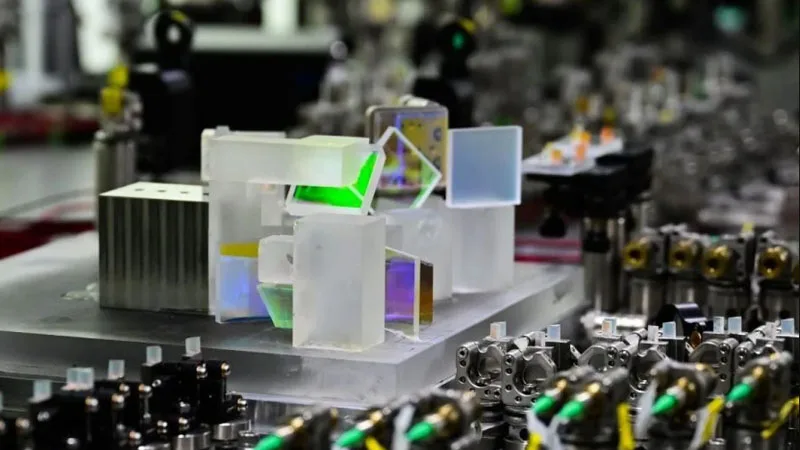
Chinese scientists have introduced the fourth generation of the Jiuzhang photonic quantum computer, marking a significant leap in quantum computing research. This new model builds upon earlier versions first revealed six years ago, enhancing its computational power by an order of magnitude.
The original Jiuzhang system, announced in 2020 as Jiuzhang 1.0, hinted at achieving quantum supremacy by solving specially designed synthetic benchmarks that classical supercomputers could not efficiently tackle. The latest iteration dramatically extends this benchmark, performing calculations in fractions of a second that would require supercomputers an inconceivable span of time—estimated to exceed the lifespan of the universe—to replicate.
Jiuzhang leverages photonic quantum computing, a method using particles of light (photons) to encode and process information. This approach differs from other forms of quantum computing that often rely on superconducting qubits or trapped ions. By manipulating photons in sophisticated circuits, the system achieves complex sampling tasks that test the boundaries of modern computational theory.
This advancement underscores the rapid evolution of quantum hardware capabilities and the increasing feasibility of deploying photonic quantum processors for specialized computational problems. While practical, widespread applications remain in development, the achievement signals a milestone in demonstrating the potential power quantum machines hold compared to classical counterparts.
The details of the system’s architecture, precise benchmarks, and prospective use cases have not been fully disclosed. However, the progress indicates continued momentum in quantum research efforts within China, complementing global initiatives exploring various quantum technologies.
As quantum computing technologies mature, these breakthroughs could eventually reshape fields requiring extensive computation such as cryptography, materials science, and complex simulations. For now, the Jiuzhang project stands as a prominent example of the expanding capabilities in photonic quantum systems, challenging traditional supercomputer paradigms.
Chinese researchers unveil the latest Jiuzhang photonic quantum computer iteration, demonstrating computational speed beyond supercomputing capabilities.