Memory Chip Makers Face Potential DRAM Oversupply by 2028 Amid Massive Capacity Expansions
July 20, 2026
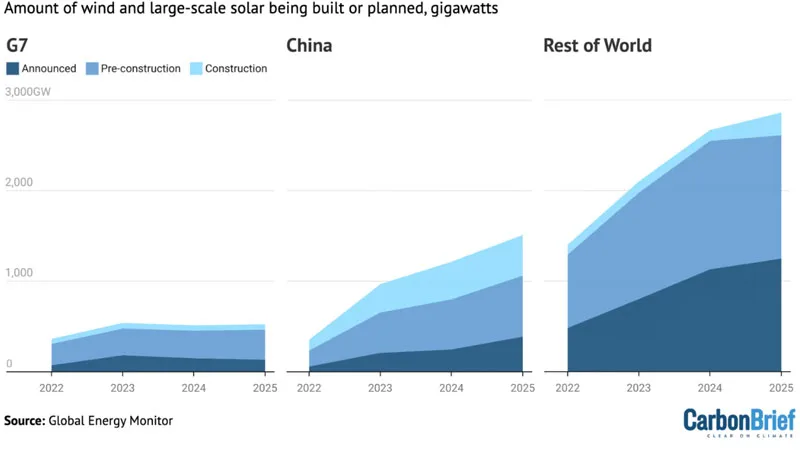
In recent years, a notable shift has occurred in the global renewable energy landscape, with developing countries, particularly China and India, accelerating their growth in green energy projects while the world’s wealthiest nations appear to have slowed their efforts. Analysts suggest this divergence could impact the credibility of the Western-led climate agenda.
Over the last three years, China and India have significantly increased their investments and implementation of renewable energy initiatives. This expansion includes large-scale deployments of solar, wind, and other clean technologies, positioning these nations at the forefront of the global green energy transition. Their continued commitment underscores the growing role of emerging markets in shaping the future energy system.
China, the world’s largest energy consumer, has leveraged its industrial base and policy framework to boost renewable capacity rapidly. Similarly, India’s growing energy demand has been increasingly met by raising renewable output, reflecting both environmental priorities and a need to support sustainable economic growth.
These developments occur as part of broader strategic goals to reduce carbon emissions and build more resilient energy infrastructures. This progress highlights how emerging economies are becoming major players in addressing climate change through tangible actions on renewable energy.
In contrast, countries within the Group of Seven (G7)—comprising some of the wealthiest economies globally—have reportedly curtailed their planning and development in the renewable energy sector. Reports indicate a decline in new project proposals and a more cautious approach to expanding green capacity across these nations.
This seeming slowdown among the G7 raises concerns among experts and climate advocates. The Group of Seven has historically been influential in setting international climate agendas and has pledged to support the clean energy transition amid rising global environmental challenges. Reduced momentum in their renewable strategies potentially threatens the collective impact of these efforts on global targets.
The relative stagnation of green energy expansion in advanced economies juxtaposed with rapid growth in developing nations also reflects a broader geopolitical dynamic. As China and India gain influence through climate action, the perceived leadership of Western countries in this domain is increasingly questioned.
These trends underscore the complexity of global climate governance and highlight the need for renewed commitments from all nations, particularly those with greater financial and technological resources. Achieving global climate goals depends on cooperative action that balances ambition among both emerging and developed economies.
The evolving roles of China, India, and the G7 in renewable energy development will continue to shape international discussions and policies in the years ahead. Monitoring these shifts provides insight into the future direction of the global energy transition and climate diplomacy.
Over the past three years, China and India have driven renewable energy expansion as G7 countries reduce their commitments, challenging Western climate leadership.