
Memory Chip Makers Face Potential DRAM Oversupply by 2028 Amid Massive Capacity Expansions
July 20, 2026
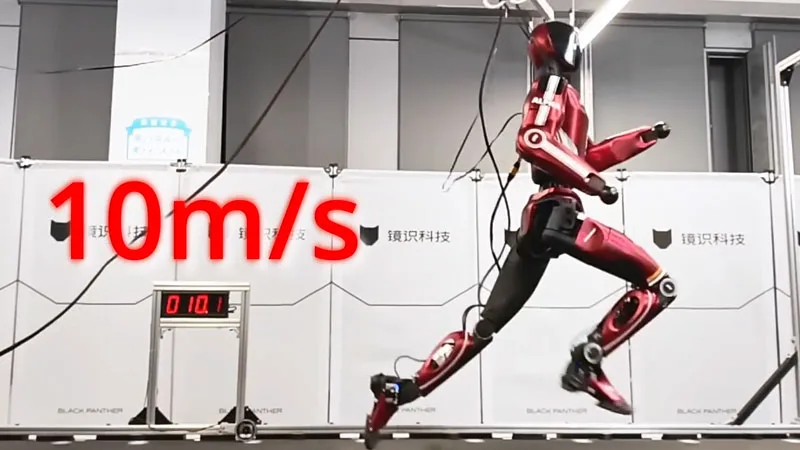
Chinese engineers from the Institute of Humanoid Robotics at Zhejiang University, in collaboration with MirrorMe Technology and Kaierda, have introduced an advanced full-sized humanoid robot named Bolt. This robot has achieved a top speed of 10 meters per second (approximately 36 kilometers per hour), setting a new world record for humanoid robots.
The new robot, Bolt, is designed to emulate human movement but stands out for its remarkable speed capabilities. Reaching speeds over 35 kilometers per hour places it in a category previously considered impossible for robots mimicking human locomotion, pushing the boundaries of robotic mobility technology.
The project represents a significant milestone in the development of anthropomorphic robots, highlighting ongoing efforts to create machines capable of faster, more dynamic, and more agile movement patterns similar to human athletes. Researchers have likely leveraged advancements in actuators, control systems, and lightweight materials to achieve these results, although specific technical details were not disclosed.
Naming the robot Bolt draws a symbolic parallel to the legendary Jamaican sprinter Usain Bolt, widely regarded as one of the fastest humans ever. This association underscores the robot’s record-setting speed and the ambitious goals driving the development team.
While previous humanoid robots have demonstrated walking or running capabilities, none have matched this velocity, making Bolt a significant achievement in the robotics community globally. The ability to move rapidly with balance and coordination in complex environments is crucial for future applications, including search and rescue, logistics, and human-machine interaction where speed and dexterity matter.
The collaboration between Zhejiang University and technology companies MirrorMe Technology and Kaierda illustrates the increasing role of academia-industry partnerships in advancing robotics innovation. Such joint efforts accelerate practical development and potentially facilitate the integration of robotic systems into various commercial and industrial settings.
Details regarding the robot’s design specifications, materials, power source, cost, or potential commercial availability were not revealed. However, the achievement marks an important step forward in demonstrating the capabilities humanoid robots may soon possess.
Overall, Bolt’s breakthrough speed represents both an engineering feat and an inspiration for ongoing research in humanoid robots, which continue to evolve toward matching and exceeding human physical performance in controlled environments.
A new humanoid robot named Bolt from China reached 36 km/h, setting a global speed record for robots resembling humans.