Memory Chip Makers Face Potential DRAM Oversupply by 2028 Amid Massive Capacity Expansions
July 20, 2026
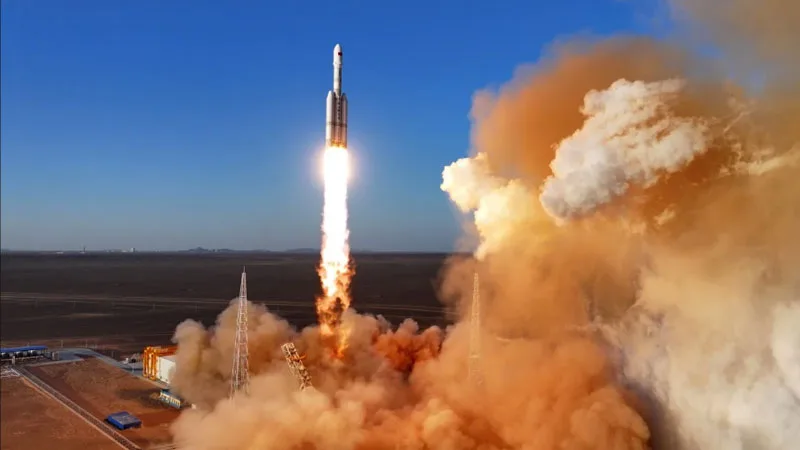
China’s commercial space sector achieved a notable milestone with the recent successful launch of the Kinetica-2 rocket, also identified as Lijian-2 Y1, developed by CAS Space. The launch took place from the Jiuquan Satellite Launch Center in northwestern China and successfully placed three satellites into orbit.
What distinguishes this mission is not only its technical success but also its economic impact. CAS Space reported that the cost of this orbital delivery was lower than that of the widely recognized SpaceX Falcon 9 rocket. This achievement underscores China’s growing capabilities in commercial spaceflight and signals an intensifying competition in the global launch market.
The Kinetica-2 rocket’s ability to deploy multiple satellites on a single mission while operating at reduced expenses marks a significant development for China’s private aerospace industry. While concrete pricing details were not disclosed, the comparison to the Falcon 9—a reusable launch vehicle frequently used for satellite deployment and space cargo delivery—offers insight into the cost competitiveness of Chinese launch providers.
The launch from Jiuquan, a key site for China’s space missions, highlights the country’s expanding infrastructure to support commercial space initiatives outside of state-run programs. This development may encourage further investment and innovation within China’s growing ecosystem of private aerospace companies.
This milestone places China more prominently on the map within the competitive commercial space domain, demonstrating the potential to offer cost-effective alternatives to established providers in the United States and internationally.
The successful deployment of three satellites marks a continued trend of expanding satellite constellations and increasing demand for affordable, reliable access to orbit. It also reflects broader global shifts as emerging players challenge the dominance of companies that have traditionally led the commercial space launch sector.
Although the broader impact on market dynamics will unfold over time, the Kinetica-2 mission’s cost achievement could accelerate shifts in launch service pricing and accessibility, encouraging more frequent and economically viable space missions worldwide.
China’s Kinetica-2 rocket successfully delivered satellites to orbit at a cost lower than SpaceX’s Falcon 9, marking a significant milestone.