App Store Sees Surge in New Apps Amid Growth of No-Code Platforms in Early 2026
July 21, 2026
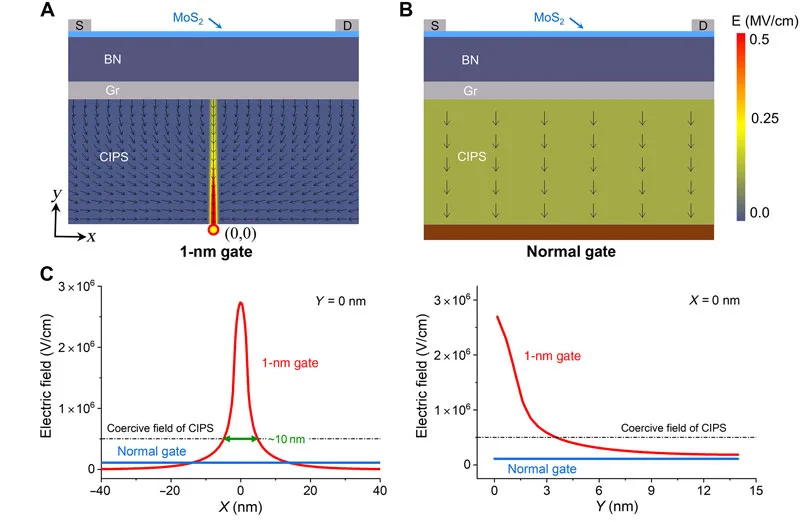
Researchers in China have introduced a novel type of flash memory designed to meet the increasing demands of artificial intelligence (AI) processing. This memory leverages ferroelectric field-effect transistors (FeFETs), a technology that offers significant advantages over conventional CMOS-based memory architectures.
As traditional memory technologies based on complementary metal-oxide-semiconductor (CMOS) fabrication methods approach their physical and performance limitations, developers are revisiting FeFET devices. These transistors distinctively combine high-speed switching capabilities with non-volatile data retention — retaining stored information without the need for continuous electrical power.
Compared to the field-effect transistors commonly used in today’s FinFET designs, FeFETs can switch states more rapidly, which enhances processing speeds critical for AI workloads. Additionally, their ability to maintain data without power significantly reduces energy consumption, addressing one of the key challenges in scaling AI hardware.
Although FeFET technology has been explored for some time, practical implementation faced multiple obstacles. Issues related to material stability, integration complexity, and endurance had previously limited widespread adoption. The recent development by Chinese engineers reportedly overcomes several such barriers, presenting a compelling option for next-generation AI memory solutions.
This breakthrough holds promise for improving the efficiency of AI systems, where rapid access to and storage of large data sets are essential. The combination of speed and low power usage could enable more powerful and energy-conscious AI hardware across a range of applications.
Details regarding the device’s exact performance metrics, manufacturing process, or commercialization timeline were not disclosed. Nonetheless, the advancement marks a notable step forward in memory technology, showcasing the potential of ferroelectric transistors to redefine the capabilities of AI hardware in the near future.
A new FeFET flash memory developed in China aims to boost AI efficiency with enhanced speed and lower power consumption.