App Store Sees Surge in New Apps Amid Growth of No-Code Platforms in Early 2026
July 21, 2026
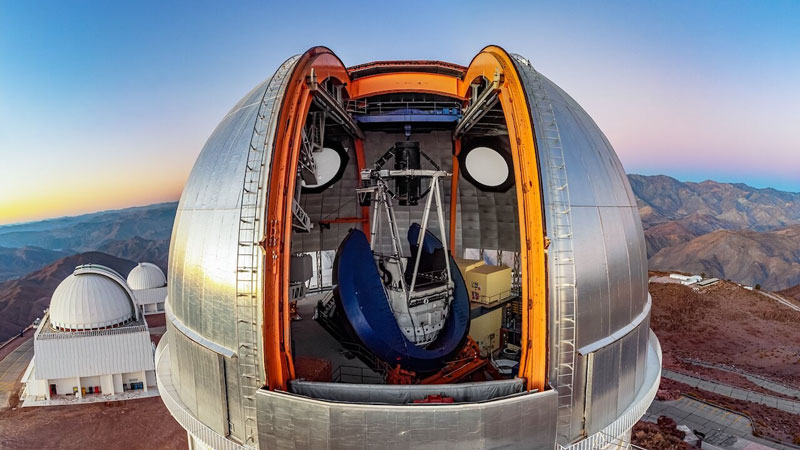
The Dark Energy Survey (DES), a large-scale astronomical project, has released a comprehensive suite of 19 research papers analyzing six years of collected data. The effort aimed to probe dark energy, a mysterious force accelerating the universe’s expansion, by studying galaxy and cluster distributions up to 10 billion light years away. Despite this unprecedented dataset, definitive answers about the universe’s underlying structure have yet to emerge.
Between 2013 and 2019, DES employed four complementary observational methods to examine cosmic phenomena associated with dark energy. The new analysis represents the most exhaustive examination of this data, combining measurements of galaxy clustering, gravitational lensing, and supernovae. These approaches have provided a detailed map of how matter is distributed across vast cosmic distances and time.
Scientists involved in the project have reported nuanced insights into dark energy’s properties and its role in cosmic acceleration. However, the studies also highlight competing interpretations and unresolved tensions within the data. This ongoing debate reflects the complexity of modeling the universe’s behavior at massive scales, as well as limitations in current theoretical frameworks.
The raw volume and quality of DES data mark a milestone in observational cosmology, setting a new benchmark for future research endeavors. By refining constraints on dark energy’s characteristics, this work strengthens the foundation for subsequent scientific exploration and theoretical development.
The Dark Energy Survey joins several other major projects targeting cosmic acceleration, following in the footsteps of programs such as the Sloan Digital Sky Survey and the upcoming Euclid mission by the European Space Agency. These initiatives collectively seek to decode the nature of dark energy through advanced instrumentation and comprehensive sky surveys. The ongoing accumulation and interpretation of astronomical data continue to play a vital role in shaping current cosmological models and uncovering the universe’s hidden forces.
Future analyses will likely build on DES findings by incorporating more data and improved computational techniques. With technological advancements in telescope capabilities and data processing, researchers aim to clarify lingering uncertainties about dark energy, its equation of state, and overall influence on cosmic evolution.
Nineteen studies from six years of Dark Energy Survey data deepen understanding of cosmic expansion but leave key questions unresolved.