
Memory Chip Makers Face Potential DRAM Oversupply by 2028 Amid Massive Capacity Expansions
July 20, 2026
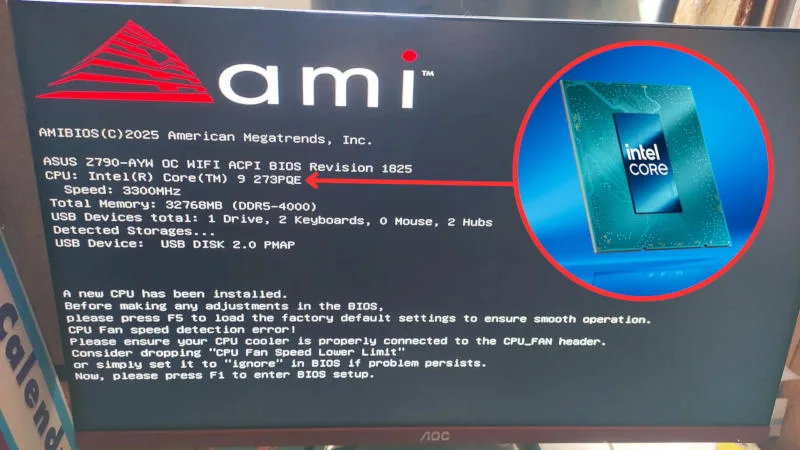
Intel recently introduced its Bartlett Lake processors aimed at embedded and industrial applications. These CPUs, built on the Raptor Lake architecture, feature only performance cores (P-cores) and are not designed to function with standard consumer motherboards.
Despite the incompatibility with traditional PC hardware, a technology enthusiast found a way to operate a Bartlett Lake processor on a typical consumer-grade motherboard. Accomplishing this required overcoming the lack of official support by modifying the motherboard’s BIOS firmware.
The BIOS, which controls hardware initialization and communication during startup, typically does not recognize or support processors that deviate from intended usage scenarios. To enable the Bartlett Lake CPU, the enthusiast leveraged artificial intelligence to rewrite parts of the BIOS, effectively bypassing restrictions that would normally prevent the system from booting.
This workaround highlights the growing role of AI in complex firmware adjustments and hardware experimentation. It also demonstrates the flexibility of embedded architecture CPUs when adapted beyond their standard environments.
Intel’s Bartlett Lake processors cater primarily to embedded and industrial markets, where computing efficiency and performance core optimization matter. The exclusion of efficiency cores (E-cores) differentiates Bartlett Lake from typical desktop Raptor Lake CPUs, aligning it more closely with specific industry needs.
Since Bartlett Lake processors were not intended for consumer platforms, running these chips on off-the-shelf motherboards required an inventive approach. Successfully booting a system with such a CPU on a mainstream motherboard illustrates both technical expertise and the potential for creative engineering solutions that expand hardware compatibility.
Official details on pricing, availability, or support for Bartlett Lake CPUs in consumer applications remain undisclosed. However, this feat indicates the possibility for enthusiasts and developers to push the boundaries of current Intel hardware and firmware limitations using emerging AI techniques.
This development may inspire further experimentation with embedded processors on non-traditional platforms, potentially influencing future designs or unofficial hardware modifications. Intel’s embedded solutions thus continue to attract interest beyond their original industrial scope, as hobbyists explore new use cases with intelligent software tools assisting their efforts.
An enthusiast successfully operates Intel’s Bartlett Lake CPU on a consumer motherboard by using AI to modify the BIOS firmware.