
Meta Unveils New AI-Powered Smart Glasses Line Without Ray-Ban Branding Starting at $299
June 23, 2026
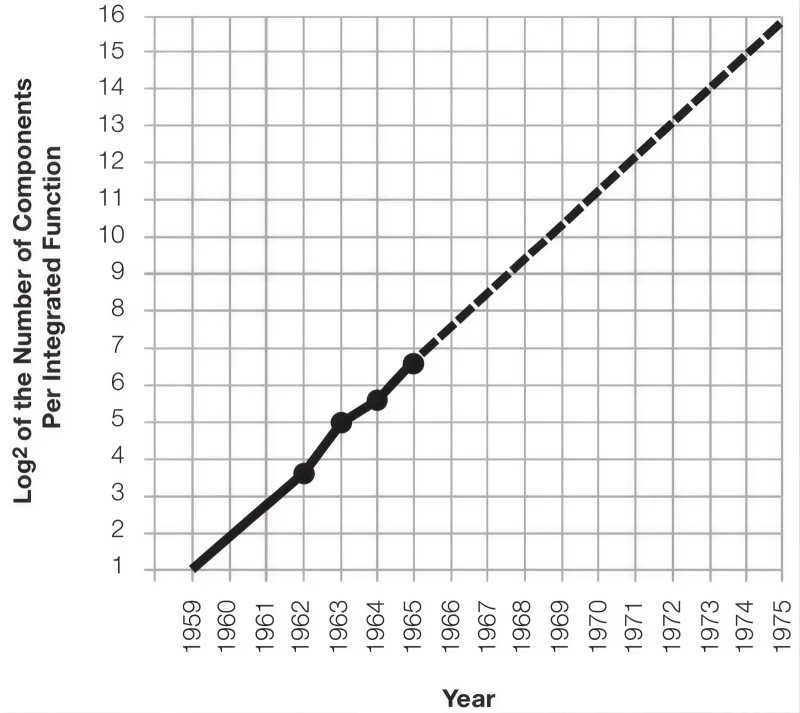
In the world of semiconductor development, Moore’s Law has long served as a vital benchmark guiding progress and expectations. Originally an empirical observation predicting the doubling of transistor counts on integrated circuits approximately every two years, it has profoundly shaped the tech industry’s approach to innovation and manufacturing.
Today, however, engineers and commercial entities worldwide are collectively striving to preserve the essence of Moore’s Law, even as its original formulation undergoes significant transformation. This evolution reflects both the mounting challenges in further scaling traditional silicon-based chips and the shifting landscape of computing technologies.
The initial simplicity and predictability of Moore’s Law contributed to its widespread acceptance and integration into strategic planning across the semiconductor industry. Yet, as physical and economic barriers have emerged, it has become necessary to reinterpret what it means to keep pace with Moore’s Law.
Rather than focusing solely on transistor density, the modern interpretation includes a broader range of innovations encompassing materials science, chip architecture, and manufacturing techniques. This broader view acknowledges that performance improvements and cost efficiencies can no longer rely exclusively on shrinking transistor size.
Industry players are increasingly exploring alternative approaches such as three-dimensional chip designs, new semiconductor materials beyond conventional silicon, advanced packaging, and integration of artificial intelligence accelerators. These efforts aim to maintain a rhythm of technological advancement consistent with the spirit of Moore’s Law, if not its original technical specifics.
While the formulation of the law is evolving, its cultural and operational influence remains substantial. The concept continues to serve as a powerful motivator and a yardstick against which technology progress and roadmaps are measured.
As the semiconductor industry confronts the impending limits of classical scaling, the reinvention of Moore’s Law underscores a broader truth: innovation in technology frequently demands redefining established paradigms to keep pace with emerging realities. This transition period is as much about strategic vision as it is about engineering prowess, ensuring the continued advancement of computing capabilities for the future.
Global engineers and industry leaders are redefining Moore’s Law to adapt and continue its legacy amid changing technological realities.