Advancements in CFET Technology Promise Faster, Smaller, and More Reliable Semiconductor Transistors
July 21, 2026
Since the imposition of US sanctions in 2019, Chinese technology giant Huawei Technologies has faced significant challenges in procuring advanced memory chips. These restrictions have limited the company’s ability to acquire cutting-edge flash memory essential for manufacturing high-capacity solid-state drives (SSDs).
With the depletion of its stockpiled memory components acquired prior to the sanctions, Huawei has been compelled to explore alternative approaches to sustain its production of large-capacity SSDs. The conventional Western flash memory technology, known for its high data density, is now inaccessible under current trade constraints.
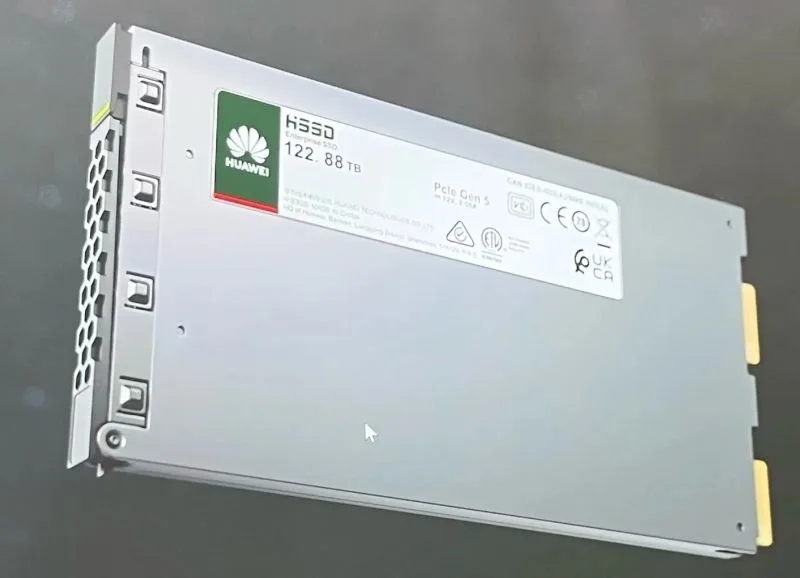
In response, Huawei has devised new methods to fabricate SSDs with massive storage volumes by leveraging flash memory sourced from Chinese suppliers. Although this domestically available memory technology offers lower storage density compared to its Western counterparts, Huawei’s approach enables the creation of drives capable of reaching 122 terabytes of capacity.
This development highlights Huawei’s strategic efforts to circumvent supply chain limitations by adapting to available components and optimizing design architectures. The solution addresses the urgent need for high-capacity data storage in enterprise and data center environments, sectors where Huawei continues to seek competitiveness despite external restrictions.
The technical specifics of Huawei’s new SSDs and the underlying architecture have not been publicly disclosed. Additionally, details regarding performance metrics, market availability, and pricing remain unannounced. However, this advancement underscores an important milestone amid ongoing trade challenges impacting the semiconductor industry worldwide.
Huawei’s progress signals a broader shift toward reliance on domestic semiconductor technologies within China as geopolitical tensions continue to influence global technology supply chains. The company’s ability to engineer high-capacity storage solutions without access to leading-edge flash memory may have implications for future product strategies and competitive dynamics in the data storage market.
Under US sanctions limiting access to advanced memory chips, Huawei finds a way to build 122TB SSDs using less dense Chinese flash memory.