App Store Sees Surge in New Apps Amid Growth of No-Code Platforms in Early 2026
July 21, 2026
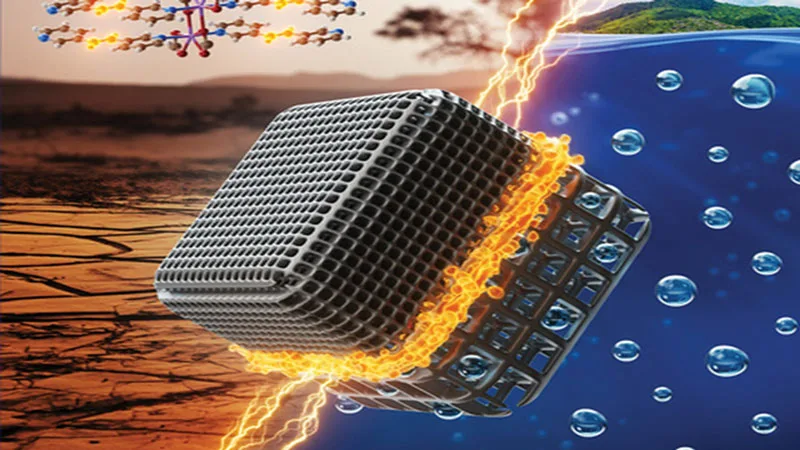
Chemists at the University of Iowa have introduced a novel material designed to pull water vapor directly from the atmosphere using sunlight, potentially revolutionizing water harvesting technologies. Unlike traditional approaches that rely on energy-intensive or highly controlled environments, this new method functions passively under natural sunlight, offering an innovative path for water extraction.
Conventional water extraction systems frequently use porous absorbents that require significant energy input to capture moisture from the air or operate under precise conditions. The team’s breakthrough revolves around a specially engineered crystalline structure that responds to ultraviolet light emitted by the sun. This design enables the material to autonomously attract and condense water vapor, effectively creating a sustainable and continuous source of water while exposed to sunlight.
The material operates as a solar-activated absorber, where the ultraviolet component of sunlight triggers the crystal to engage its moisture-attracting properties. This eliminates the need for external energy sources typically necessary for extracting humidity from the atmosphere. Such a material could be likened to an “inexhaustible flask,” sustaining water collection simply by basking in daylight.
While specific performance metrics and deployment scenarios have not yet been disclosed, the development suggests promising applications for regions where water scarcity is a persistent challenge. The passive nature of the technology strongly supports environmentally friendly water provision, potentially reducing reliance on traditional water infrastructure or energy-consuming extraction methods.
Further research and practical testing will determine the scalability and durability of the sunlight-activated crystal in diverse atmospheric conditions. This initiative underscores rising interest in clean technologies that harness renewable environmental resources without additional energy expenditure.
As water demands grow globally, materials science innovations like this could play a critical role in meeting needs sustainably. The University of Iowa’s contribution marks a significant advance in harnessing ambient atmospheric moisture by leveraging nature’s own energy — the sun.
Researchers engineer a crystal material powered by sunlight that harvests water vapor from air without energy cost.