Vivo X300 E Launches Soon with Zeiss Optics and Massive 7200mAh Battery
July 20, 2026
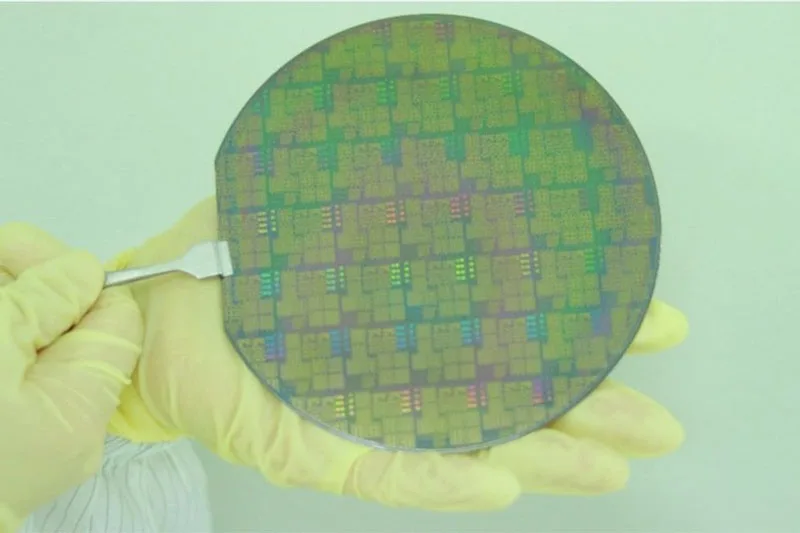
Huawei, in collaboration with researchers from Nanjing University, has revealed a breakthrough in semiconductor technology with the development of a RISC processor built using two-dimensional (2D) materials. Published recently in the journal Nature Electronics, this advancement uses 2D transistors to achieve transistor density comparable to cutting-edge 2-nanometer manufacturing processes employed by industry leaders.
This innovation presents a significant step forward for China’s semiconductor capabilities, particularly in the current landscape marked by restricted access to extreme ultraviolet (EUV) lithography tools from suppliers like ASML. EUV lithography is critical for producing the most advanced chips used by companies such as Taiwan Semiconductor Manufacturing Company (TSMC) and Intel, but access to this technology has been limited due to geopolitical factors and export controls.
The demonstrated processor integrates 2D transistors, known for their atomic-scale thickness and superior electrostatic control, enabling increased transistor density without reliance on advanced EUV lithographic equipment. This design approach could allow China to continue advancing its semiconductor manufacturing independently using domestically produced equipment, thus bypassing the constraints imposed by sanctions and export restrictions.
The use of 2D materials in transistor construction represents an alternative to traditional silicon-based scaling methods, which face physical and economic challenges at smaller nodes. By employing 2D semiconductors, transistors can be packed more densely without the complex and costly processes required for EUV lithography. This could bridge the gap with global leaders currently leveraging EUV technology at the 2-nanometer scale.
Industry analysts point to this achievement as a potential game-changer for China’s semiconductor ambitions, reducing dependency on foreign technology and enabling more competitive chip production. The collaboration between Huawei and academic researchers exemplifies a growing trend in leveraging new materials and innovative fabrication techniques to push the limits of microprocessor performance and integration density.
While specific performance benchmarks and commercial plans for chips using these 2D transistors have yet to be announced, the foundational research provides a promising pathway for future chip manufacturing in China. It may also inspire further developments globally as semiconductor companies explore novel materials and methods beyond conventional lithography paradigms.
This work marks a notable milestone in semiconductor research, emphasizing material science as a critical frontier for advancing computing technology. It also underscores the evolving dynamics of the semiconductor industry where breakthroughs are increasingly driven by collaborations between corporate research teams and academic institutions.
As the global chip market continues to experience high demand alongside geopolitical tensions, innovations such as Huawei’s 2D transistor RISC processor could reshape the landscape of semiconductor manufacturing capabilities and supply chains.
Huawei and Nanjing University created a RISC processor using 2D transistors, aiming to match chip density without advanced EUV lithography.