Sony Unveils Alpha 7 V: A Balanced Full-Frame Mirrorless Camera for Versatile Use
July 13, 2026
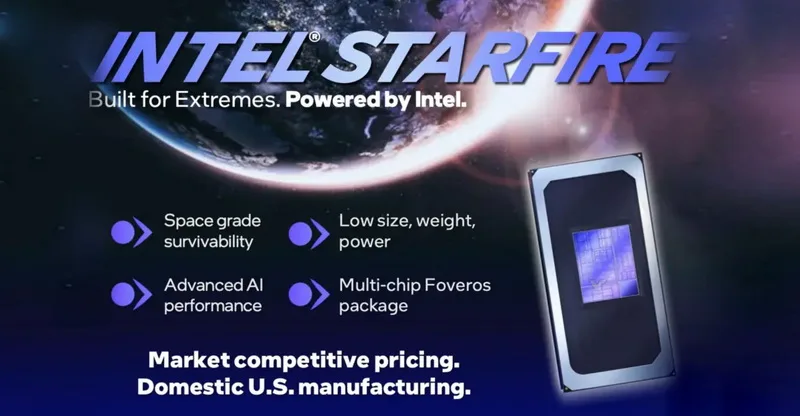
Intel has announced the Starfire processor, engineered for use in space missions and other applications requiring high resilience to extreme environmental conditions. This new chip is designed to endure operating temperatures ranging from as low as −55 degrees Celsius up to 125 degrees Celsius, making it suitable for the harsh climates encountered beyond Earth’s atmosphere.
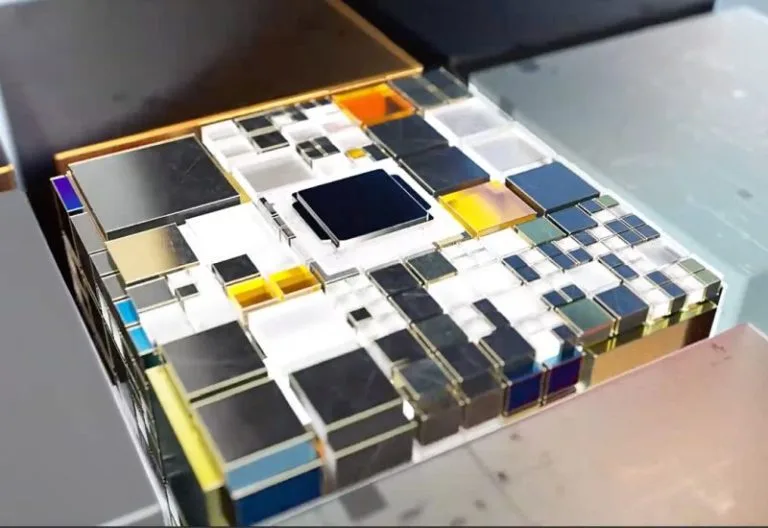
The Starfire processor integrates multiple processing units within a single package, combining a central processing unit (CPU), graphics processing unit (GPU), and neural processing unit (NPU). This multi-chip design leverages Intel’s Foveros packaging technology, which enables efficient stacking and interconnection of different chip components into a compact and power-optimized solution.
By incorporating the CPU, GPU, and NPU into one module, the Starfire processor aims to provide versatile computational capabilities for advanced space systems. This facilitates a range of applications including real-time data processing, machine learning, and graphics-intensive tasks, all critical for modern spacecraft operations and autonomous systems in space.
Intel’s focus on durability and temperature tolerance addresses one of the key challenges faced by electronics operating in space, where devices must maintain functionality despite large fluctuations in temperature and exposure to radiation. The wide operating temperature window of Starfire enables it to maintain performance across diverse environmental stressors.
While specific performance metrics, availability dates, and pricing details have not been revealed, the introduction of Starfire marks a significant step for Intel in targeting aerospace and defense markets, expanding the firm’s portfolio beyond traditional server and consumer processors.
The adoption of Foveros multi-chip packaging in the Starfire processor also highlights Intel’s continued investment in advanced semiconductor manufacturing technologies to meet specialized application needs. This approach allows customization of hardware components suited to unique operational demands while optimizing power consumption and physical footprint.
Intel’s move into robust processors for space signals growing industry attention on deploying sophisticated, AI-capable processing units directly in orbit or other extreme environments, enabling more autonomous and intelligent systems. The integration of an NPU supports on-device AI processing, which can be crucial for reducing latency and reliance on remote communication in space missions.
As space exploration and satellite technology continue to evolve, the development of processors like Starfire may play a vital role in supporting next-generation spacecraft, remote sensing, and mission-critical systems requiring high reliability under extreme conditions.
Intel introduces Starfire, a multi-chip processor designed for space and extreme environments, functioning from −55 to +125 °C.