
Intel Commits €5 Billion to Expand Ireland Chip Factory for Next-Gen Processors
July 13, 2026
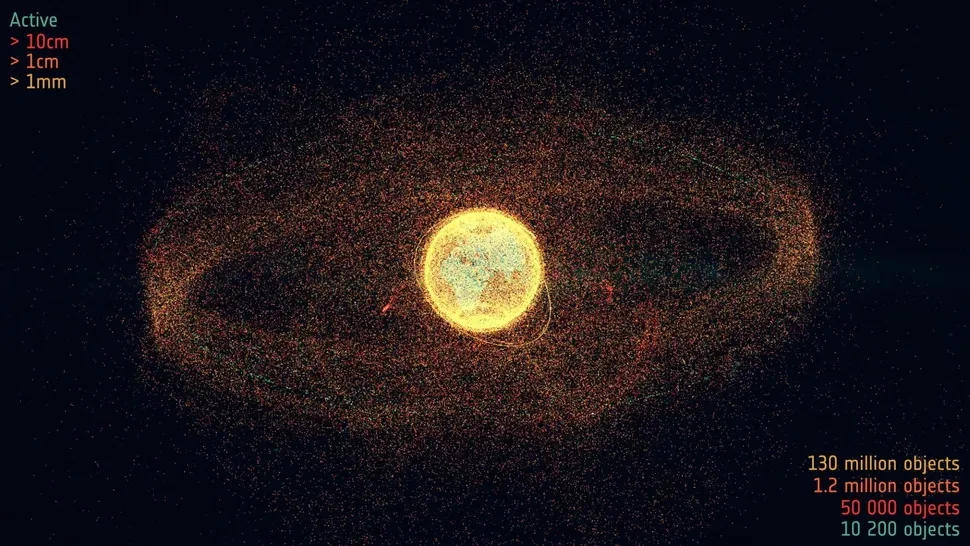
A recent study has uncovered the presence of small debris particles, approximately 5 centimeters in size, in geosynchronous orbit (GEO), an orbital region critical for many of the world’s most expensive satellites. This discovery raises concerns over the long-term sustainability and safety of operations in this key orbital band.
Geosynchronous orbit, located about 22,236 miles (35,786 kilometers) above Earth’s equator, is home to satellites that support essential services such as telecommunications, weather monitoring, and navigation. Due to the high value and limited number of satellites operating in this orbital zone, space debris within it can result in significant operational risks and costly damages.
The study, published in June in the Journal of Astronautical Sciences, highlights that even small debris fragments, roughly the size of a soda can, have accumulated in this orbit. While these pieces may seem negligible, their relative velocities mean collisions can lead to catastrophic consequences, potentially generating even more debris, a situation known as the Kessler syndrome.
Up until now, space debris concerns have mostly focused on low Earth orbit (LEO), where satellites and the International Space Station operate closer to Earth. However, this new research indicates that debris is also a growing problem in GEO, which has traditionally been considered a less cluttered environment. This shifts the spotlight onto the need for enhanced debris monitoring and mitigation strategies in higher orbits.
Satellite operators rely on stable, clear orbits to maintain the continuous services essential for global communications infrastructure, broadcasting, and military operations. Increased debris density could complicate satellite maneuvering and raise insurance costs, potentially impacting satellite deployment planning and lifespan.
Experts emphasize that ongoing efforts to track and manage orbital debris must be expanded to include GEO, alongside continued development of technologies designed to remove or avoid collision with debris. The study’s findings serve as an important reminder of the expanding scope of space environmental challenges that must be addressed to safeguard critical satellite assets.
Addressing the debris issue in geosynchronous orbit will require cooperation across international space agencies, private companies, and policymakers to establish guidelines and technologies to prevent further accumulation and ensure the longevity of space-based services vital to modern life.
Tiny fragments of space debris near geosynchronous orbit threaten expensive satellites vital to global communications and navigation.