
Oracle’s Debt Challenges Threaten AI Data Center Project for OpenAI
July 21, 2026
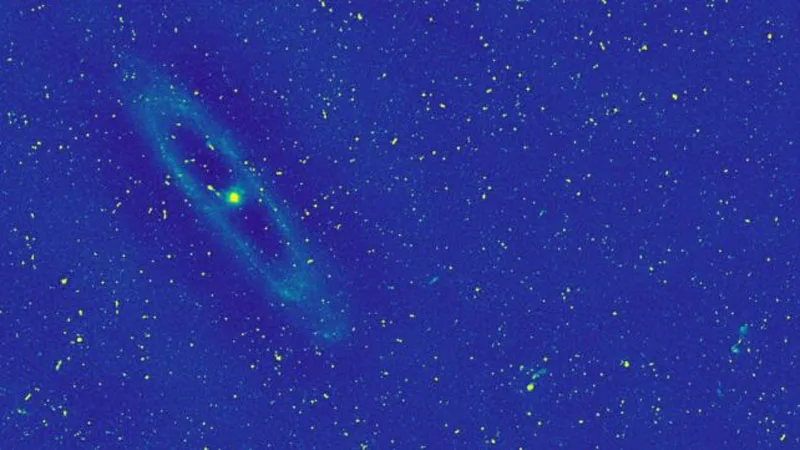
A multinational group of astronomers has released the third data set from the LOFAR Two-metre Sky Survey (LoTSS DR3), marking the largest radio survey of the universe to date. This extensive study utilized LOFAR, a cutting-edge European radio telescope array, to scan the northern sky with unprecedented detail.
LOFAR (Low-Frequency Array) consists of approximately 20,000 antennas spread across multiple countries in Europe, enabling astronomers to capture low-frequency radio waves emitted by cosmic sources. Through this infrastructure, the team successfully charted a vast expanse of 88 percent of the northern celestial hemisphere, making it the most comprehensive radio map of the sky ever produced.
The latest data release unveiled a staggering 13.7 million previously unknown astronomical objects. These discoveries highlight the immense potential of LOFAR’s capability to detect faint and distant radio signals that were inaccessible with former survey technologies. The newly identified sources contribute valuable information to the understanding of cosmic phenomena such as galaxies, pulsars, and other radio-emitting bodies scattered throughout the universe.
Data from LOFAR is vital for advancing research in astrophysics and cosmology, aiding scientists in exploring the large-scale structure of the cosmos, studying the life cycle of stars, and investigating the properties of black holes and active galactic nuclei. The extensive coverage and sensitivity of the survey provide an unprecedented resource for the global scientific community.
Details regarding further applications or next phases of the LoTSS project have not been disclosed. Nonetheless, the current findings demonstrate the growing impact of radio astronomy facilitated by networks of interconnected antennas operating at low frequencies.
Researchers and institutions involved in the project emphasize that the comprehensive mapping achieved by LOFAR will serve as a foundation for future astronomical research and discoveries, potentially uncovering even more hidden aspects of the universe as data continues to be analyzed and interpreted.
The LOFAR radio telescope’s latest survey mapped 88% of the northern sky, revealing 13.7 million previously undetected objects.