App Store Sees Surge in New Apps Amid Growth of No-Code Platforms in Early 2026
July 21, 2026
Venus, often dubbed Earth’s ‘evil twin’ due to its extreme surface conditions, remains largely hidden beneath thick clouds that have historically obstructed direct observation. This dense atmospheric cover has made it challenging to study the planet’s surface using conventional optical methods.
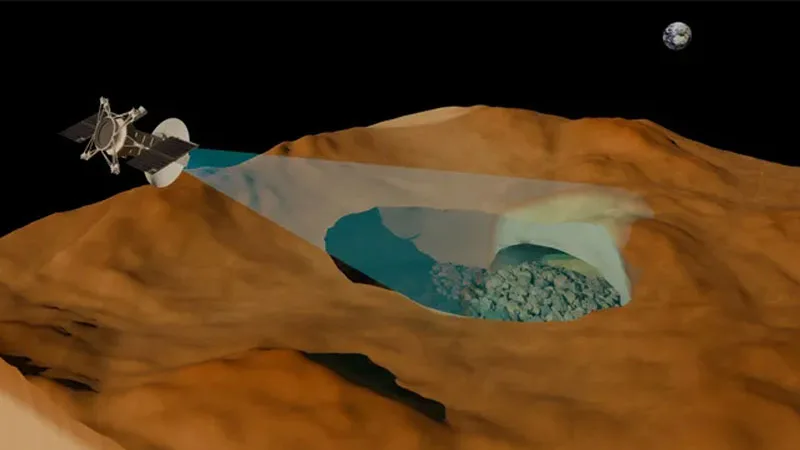
However, three-and-a-half decades ago, NASA’s Magellan mission undertook a groundbreaking approach by employing radar to penetrate Venus’s cloud cover and map its surface on a global scale for the first time. This technological achievement provided unprecedented data on the planet’s topography and geological features.
Recent analysis of the extensive radar archives from the Magellan mission has led to a significant new finding: the identification of a subterranean tunnel system that extends for tens of kilometers beneath Venus’s surface. This discovery adds a novel dimension to understanding Venusian geology and the planet’s internal structure.
The tunnel appears to be an extensive formation, indicative of complex volcanic or tectonic processes shaping the planet’s crust. Its length, reaching dozens of kilometers, suggests a scale of subterranean activity comparable to large lava tubes or other geological conduits found on Earth and the Moon.
Such a feature had not been identified through earlier observations and highlights the value of revisiting archival space mission data with modern analysis techniques. The Magellan radar datasets, despite their age, continue to offer fresh scientific insights into the characteristics and evolution of Venus.
This underground tunnel finding may have implications for understanding planetary processes on Venus, such as heat flow, volcanic activity, and crustal dynamics. It underscores the importance of radar mapping as a tool not only for surface examination but also for unveiling subsurface structures on planets otherwise obscured from view.
As interest in Venus exploration resurges, with several missions planned to further investigate the planet’s atmosphere and surface, discoveries from past missions like Magellan provide valuable context and targets for future research. The enduring legacy of the Magellan mission demonstrates how historical space exploration initiatives can continue to contribute to planetary science long after data collection has concluded.
Further study of the newly detected tunnel system may expand knowledge about Venus’s geological history and contribute to comparative planetology by offering points of comparison between Earth’s volcanic features and those of its nearest planetary neighbor.
Archival radar data from NASA’s Magellan mission uncovers an extensive subterranean tunnel stretching tens of kilometers beneath Venus’s surface.