Popular PC Components in Russia Highlight Nvidia RTX 50 Series and 1TB NVMe SSDs
July 21, 2026
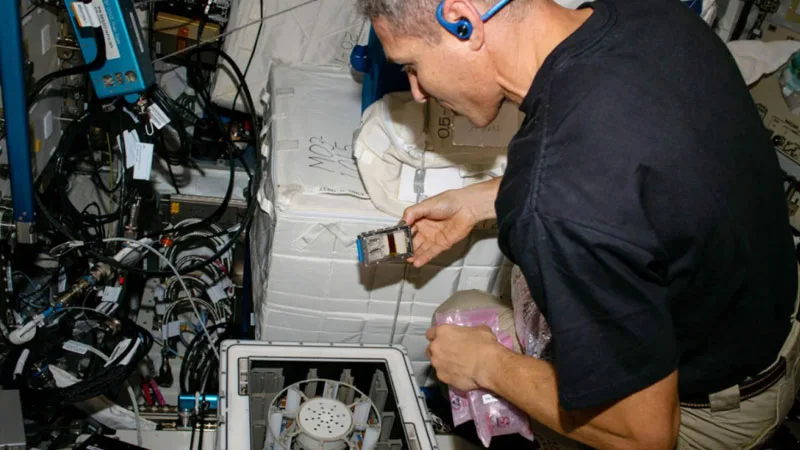
As humanity advances its presence beyond Earth, the challenge of sourcing essential materials for off-world colonies gains critical importance. While science fiction frequently envisions robotic systems undertaking mining operations in space, an emerging perspective highlights the potential role of microorganisms in asteroid mining.
Microbes on Earth have long demonstrated the ability to extract inorganic compounds from their surroundings, processing minerals with remarkable efficiency. Leveraging these natural biochemical processes could offer an innovative and sustainable approach to acquiring valuable resources in space.
The concept involves utilizing specific microorganisms capable of bioleaching—extracting metals from ores through metabolic activity—to recover valuable elements from asteroid material. Research indicates that among various metals, precious metals appear particularly amenable to microbial extraction, presenting a compelling target for space mining endeavors.
Incorporating microbial mining into asteroid resource harvesting could reduce reliance on complex mechanical systems, decreasing the volume of equipment needed for extraterrestrial mining operations. This biological approach aligns with broader efforts to minimize the ecological footprint of space activities and improve sustainability in off-Earth resource development.
The biochemical pathways employed by these microbes can be fine-tuned to target specific metals, offering potentially higher selectivity and efficiency compared to traditional mining techniques. This specificity is crucial when dealing with the limited and valuable resources found in asteroid regolith.
Beyond metals, the adaptability of microorganisms to extreme conditions—such as those in space environments—further supports their viability for astromining applications. Their capacity to function in low-gravity, radiation-exposed settings could complement mechanical systems, enhancing overall operational robustness.
Yet, several challenges remain before microbial mining can be fully integrated into space exploration strategies. These include optimizing microbial strains for space conditions, developing closed-loop bioreactors suitable for off-world environments, and ensuring safe containment and control of biological agents within space habitats.
Despite such hurdles, the intersection of microbiology and space mining offers a promising pathway toward realizing efficient extraction of extraterrestrial resources. As humanity prepares to expand its presence into the solar system, bio-assisted mining techniques could become a cornerstone of sustainable space colonization.
Microorganisms may offer a natural solution for extracting valuable metals from asteroids, supporting sustainable space resource exploitation.