Yandex Plans to Equip One-Third of Russian Hotel Rooms with Smart Home Technology by 2030
June 17, 2026
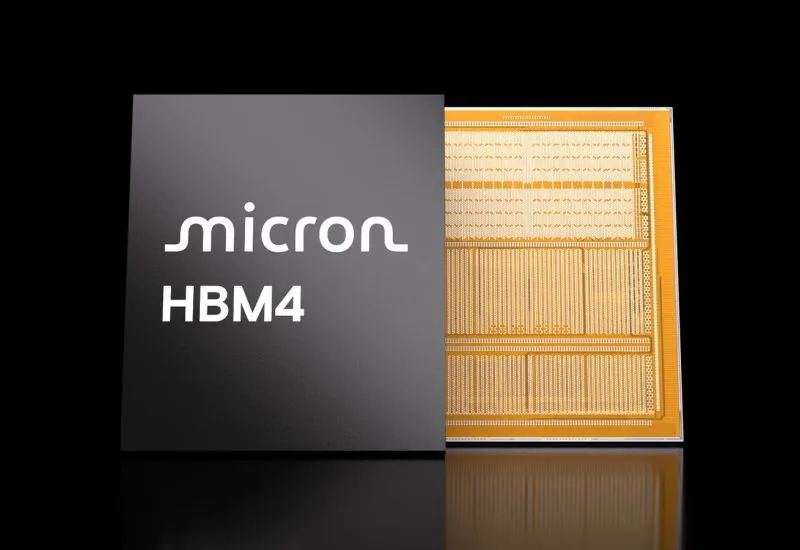
Micron Technology has announced the commencement of large-scale production of HBM4 memory chips, designed to support Nvidia’s recently unveiled AI platform, Vera Rubin. This development marks a significant step forward in memory technology integration for high-performance computing applications.
Nvidia introduced the Vera Rubin platform earlier this week, showcasing advancements designed to drive new levels of artificial intelligence processing power. Alongside this announcement, Micron revealed its role as a key supplier for the new architecture by officially confirming its mass manufacturing of HBM4 (High Bandwidth Memory) chips.
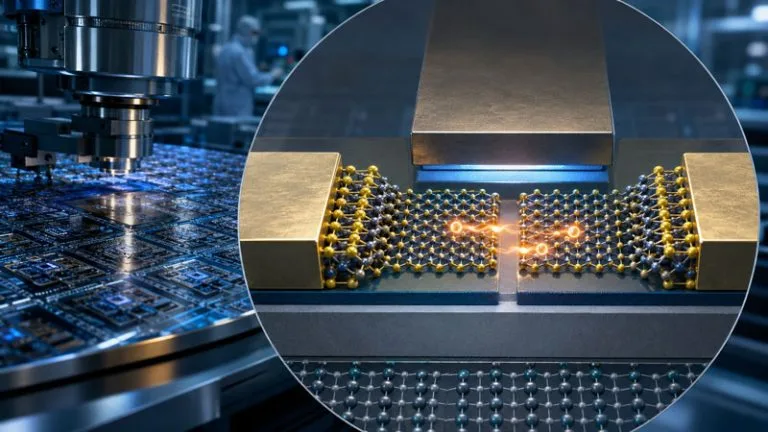
HBM4 represents the latest generation of stacked memory technology, featuring a 12-layer configuration that enables higher data throughput and improved energy efficiency compared to its predecessors. This multi-layer approach increases bandwidth densities essential for handling the demanding workloads typical of modern AI and machine learning systems.
Until recently, Micron had not publicly disclosed its involvement in the Nvidia Vera Rubin project or its production of HBM4 modules. The confirmation coincides with Nvidia’s announcement, highlighting the close collaboration between the two companies to deliver cutting-edge memory solutions tailored for contemporary AI hardware.
The integration of HBM4 into the Vera Rubin platform aligns with the broader industry trend of enhancing memory subsystems to keep pace with rapidly evolving AI computational needs. High bandwidth and low latency memory play a critical role in maximizing performance for AI workloads, where data transfer efficiency directly influences overall system capabilities.
While specific technical details regarding the memory’s performance characteristics and deployment scale remain undisclosed, the mass production of these 12-layer HBM4 chips is a clear indicator of the readiness to meet the rigorous demands of advanced AI infrastructures such as Nvidia’s Vera Rubin.
Micron’s advancement in memory manufacturing showcases ongoing innovation in semiconductor technology, particularly in packaging and stacking techniques that enable improvements in both memory density and speed. These enhancements contribute significantly to supporting the increasing complexity and scale of AI models.
The collaboration also emphasizes the growing synergy between memory manufacturers and AI platform developers, ensuring that hardware components are optimized for next-generation computing challenges.
Details regarding end-user availability or integration timelines for platforms utilizing these HBM4 modules were not discussed in the announcement. However, the move to mass production signals an imminent adoption within high-performance AI systems.
Overall, Micron’s launch of mass-produced 12-layer HBM4 memory represents a crucial infrastructure enabling component for Nvidia’s Vera Rubin and potentially other AI platforms requiring extensive data bandwidth and memory efficiency.
Micron starts large-scale manufacturing of 12-layer HBM4 memory chips to support Nvidia’s new Vera Rubin AI platform.