US Lifts Restrictions on AI Chip Exports to UAE Acknowledging Strategic Partnership
July 12, 2026
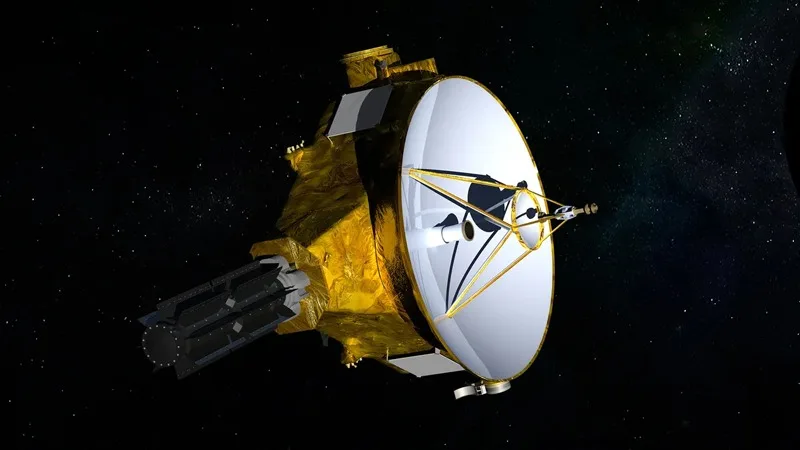
NASA’s New Horizons spacecraft has emerged from its longest period of hibernation since the mission began. Operators confirmed receipt of the wake-up signal on June 23, 2026, indicating the probe is functioning well after nearly a year in low-power mode.
The deep-space probe entered hibernation on August 7, 2025, initiating the most extended sleep cycle in its operational history. This phase lasted 321 days, during which the spacecraft operated autonomously under preloaded commands uploaded to its main computer more than a year earlier, in July 2025.
Hibernation is a common practice for long-duration missions like New Horizons, as it helps conserve power and reduce wear on onboard systems when the spacecraft is not actively conducting observations or maneuvers. The successful wake-up procedure marks a key milestone in maintaining the probe’s health and readiness for continued exploration in the outer solar system.
Since its launch, New Horizons has been conducting groundbreaking studies and returning valuable data from distant bodies. The spacecraft’s ability to enter and exit such a lengthy hibernation period without incident demonstrates the robustness of its design and mission planning.
Following reactivation, mission teams will resume routine health checks and prepare the spacecraft for upcoming scientific activities. Details regarding the next objectives or state of the mission were not disclosed at this time.
New Horizons continues to be a vital tool for advancing knowledge of the solar system’s frontier, pushing the boundaries of space exploration through innovative mission strategies involving autonomous spacecraft management and long-term planning.
NASA’s New Horizons spacecraft has exited its longest hibernation phase, signaling normal operations after 321 days in sleep mode.