Intel’s 18A-P Process Enters Pilot Production, Boosting ASML Shares to Yearly High
June 18, 2026
For decades, the prevailing scientific consensus has held that dark matter is a crucial component for the development of galaxies, stars, planets, and ultimately, life itself. According to this theory, ordinary matter clusters around concentrations of dark matter, which acts as the gravitational backbone of the universe’s large-scale structure.
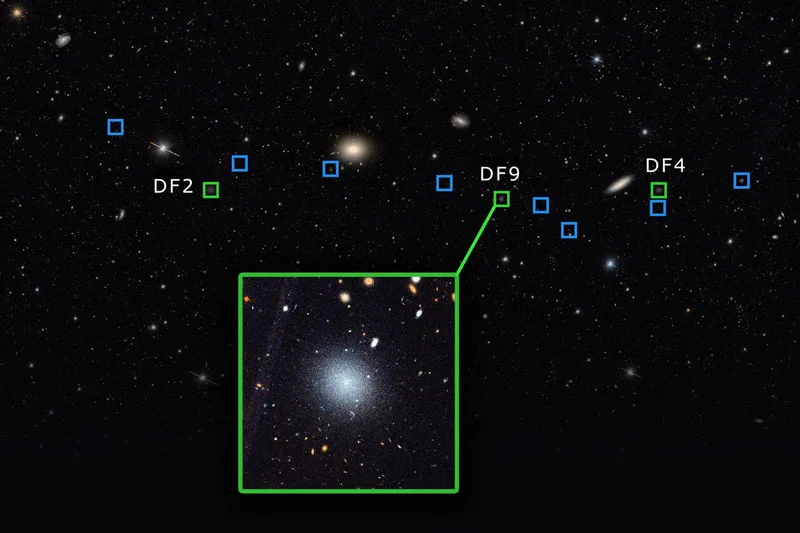
Recent research has yielded compelling evidence that challenges the notion that dark matter is indispensable for galaxy formation. Astronomers have observed instances of galaxies existing and evolving without the expected presence of dark matter within them. This finding provokes a reconsideration of the role that dark matter plays in cosmic evolution and suggests that alternative mechanisms may be responsible for the assembly and growth of galactic structures.
The discovery was made through detailed observations that measured the distribution of mass in certain galaxies, revealing a significant discrepancy between visible matter and the gravitational effects previously attributed solely to dark matter. The data indicate that some galactic systems can maintain their stability and continue their evolutionary processes purely through conventional, or baryonic, matter.
This evidence not only questions existing models of galaxy formation but also may influence future studies in astrophysics, cosmology, and particle physics. Understanding how galaxies develop without dark matter could lead to new insights into the fundamental forces that shape the universe.
While the presence and properties of dark matter remain a significant area of study, the ability of galaxies to form absent this mysterious substance broadens the scope for theoretical frameworks explaining cosmic phenomena. Continued observational campaigns and simulations will be critical to unraveling how galaxies can thrive under such conditions, potentially guiding the next generation of research in understanding the universe’s composition and origins.
As the scientific community integrates these findings, the long-held assumption of dark matter as the sole gravitational architect of galactic formation faces revision. This advancement encourages a deeper exploration of alternative theories and underscores the dynamic nature of modern astrophysical research.
Recent discoveries challenge the longstanding view that dark matter is essential for galaxy formation.