MSI Enables Support for DDR5 HUDIMM Memory on Intel 800, 700, and 600 Series Motherboards
June 17, 2026
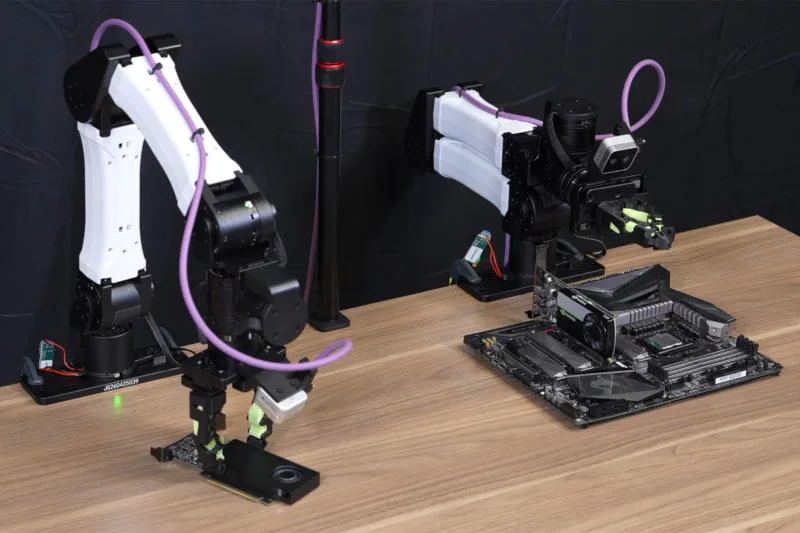
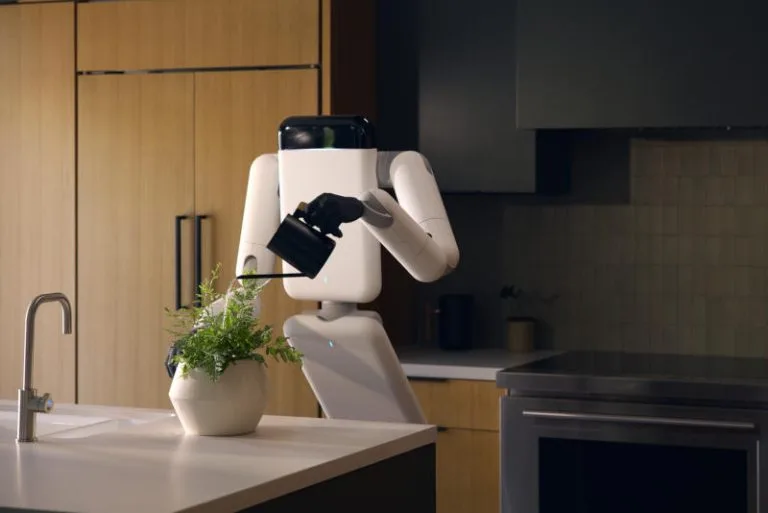
Nvidia has introduced a new group of robots operated by artificial intelligence agents capable of independently mastering complex and precise real-world tasks. Among their showcased abilities is the capacity to assemble personal computers, a process demanding fine motor skills and detailed coordination.
These AI-driven machines represent a significant advancement in robotics, demonstrating that artificial intelligence can learn and adapt to hands-on assembly work that traditionally relies on human dexterity. The initiative highlights Nvidia’s broader efforts to integrate AI with robotics to enable automation in manufacturing and assembly environments.
The robots presented by Nvidia are controlled through sophisticated AI agents that enable them to self-learn high-precision operations. This approach allows the machines to improve their skills over time without requiring explicit programming for every individual task. The system simulates real-world conditions to train the robots, teaching them the subtleties involved in manipulating small components during the construction of PCs.
Despite demonstrating proficiency in assembling various computer parts, the robots were notably not assigned to handle Nvidia’s more expensive graphics cards. This exclusion suggests prudence in entrusting highly valuable and delicate hardware to automated systems that are still in developmental phases. It also underscores a cautious approach regarding automation in dealing with costly and sensitive components.
Nvidia’s demonstration sheds light on the potential future of manufacturing lines, where AI-powered robots could autonomously undertake increasingly complex assembly tasks. This could improve efficiency and precision in the production of electronics, potentially transforming workflows in factories worldwide.
While additional details regarding the scope of the robotics project, including commercial application timelines and further capabilities, have yet to be disclosed, Nvidia’s initiative marks an interesting intersection of AI and physical robotics. The integration of self-learning AI in machines capable of physical assembly tasks aligns with broader industry trends towards smarter and more adaptive automation.
As robotics technology evolves, the role of AI agents in teaching and refining machine actions in real environments may extend beyond PC assembly to other sectors requiring high-precision manual operations. Nvidia’s demonstration provides a glimpse into how these developments could start to shape the future of hardware manufacturing and robotics.
Nvidia revealed AI-driven robots that autonomously learn to assemble PCs, though costly graphics cards were not entrusted to them.