Memory Chip Makers Face Potential DRAM Oversupply by 2028 Amid Massive Capacity Expansions
July 20, 2026
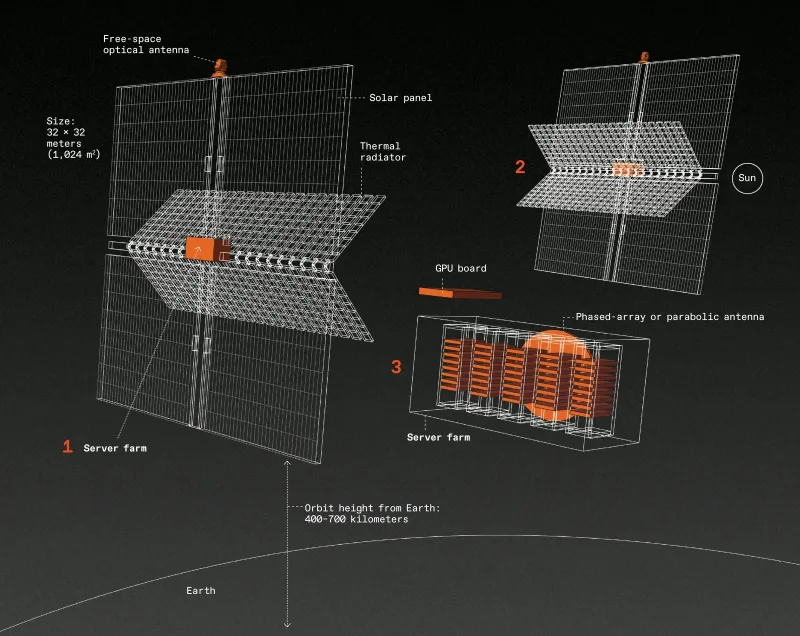
As data processing demands continue to skyrocket globally, researchers and companies are exploring new environments to host the next generation of data centers. One promising frontier is outer space, where extreme cold temperatures and nearly constant sunlight offer unique advantages for managing the heat and energy consumption challenges facing Earth-based facilities.
Traditional data centers typically require substantial cooling to manage the heat generated by dense racks of servers. Cooling infrastructure accounts for a significant portion of operating expenses and energy use. In contrast, the natural conditions in orbit are markedly different: space is intensely cold while receiving uninterrupted solar radiation, providing an abundant, virtually free power source once the initial investment in solar panel technology is made.
Operating data centers in orbit could drastically reduce the need for artificial cooling systems. The vacuum of space facilitates efficient thermal management through radiation, which could potentially convert servers radiating heat into a more manageable design challenge. Meanwhile, solar panels positioned to receive constant sunlight could deliver a steady supply of clean energy, addressing the data centers’ massive electricity requirements without the carbon footprint associated with fossil fuels.
Moreover, placing data centers beyond Earth’s atmosphere opens new possibilities for latency and connectivity in global networks, particularly for satellite communications and space-based AI applications. This shift could enhance performance for specific workloads that benefit from fast access to orbiting infrastructure or require processing power close to the data source in space.
Despite these advantages, deploying and maintaining data centers in orbit presents considerable technical, financial, and logistical challenges. Launch costs, hardware durability in the space environment, radiation mitigation, and data transmission from orbit to Earth are key obstacles that must be addressed before such facilities become mainstream. Technologies will need to evolve to withstand harsh vacuum conditions, particle radiation, and micrometeoroid impacts over long operational periods.
Interest in orbital data centers ties closely to broader trends in AI and cloud computing, where the appetite for computing capacity continues to grow rapidly. As companies seek innovative methods to expand infrastructure sustainably, space-based solutions represent a fascinating frontier which could reshape how and where computer-intensive workloads are executed. Combined with advancements in energy harvesting and cooling technologies, orbit could become a real contender for hosting future digital ecosystems.
While the concept remains in early stages, the potential environmental and operational benefits of off-planet data centers merit ongoing research and development. As investment in space technologies rises, orbital computing infrastructure may eventually complement terrestrial data centers, offering a hybrid model that leverages the best characteristics of each domain.
In summary, the cold vacuum of space paired with near-continuous solar radiation provides a compelling environment to tackle one of the most pressing issues in data center operation: energy consumption and heat management. The challenges to realize fully operational orbital data centers are formidable but not insurmountable, suggesting a provocative future direction for sustainable and scalable computing infrastructure.
Orbital data centers could leverage abundant solar energy and extreme cold in space to transform data processing infrastructure.