Intel Initiates New Round of Layoffs in Data Center Group Amid Efficiency Drive
July 21, 2026
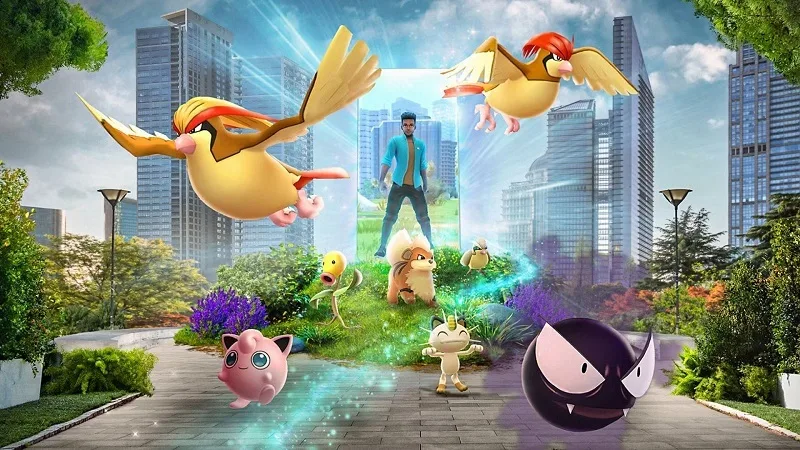
Nearly a decade after Pokémon Go launched, the augmented reality game’s influence continues to extend beyond entertainment. Once wildly popular for encouraging hundreds of millions of players to explore physical locations in search of virtual creatures, the game has now played an unexpected role in the advancement of robotics technology, particularly in the development of delivery robots.
Pokémon Go’s game mechanics, which involved players traversing real-world environments such as parks, parking lots, and public spaces, generated extensive location data and movement patterns. This wealth of information has recently been utilized to improve navigation algorithms for autonomous delivery robots, enabling them to more efficiently and safely traverse urban areas.
During its peak years, Pokémon Go amassed a vast dataset describing human behavior in a variety of environments. Players’ movements, including routes taken, repeated stops, and obstacle navigation, offered rich insights into pedestrian traffic patterns and spatial challenges within urban settings. These data points have become valuable for training machine learning models that guide delivery robots through complex landscapes.
Delivery robots face numerous challenges when operating in dynamic environments that include variable terrain, unpredictable obstacles, and human activity. By leveraging historical gameplay data collected without players’ knowledge of its secondary application, engineers have been able to refine algorithms to anticipate and adapt to real-world conditions more effectively.
The integration of this crowd-sourced navigation data represents a novel approach to machine learning in robotics. Unlike conventional methods that rely heavily on controlled environments or specialized sensors, this new strategy benefits from years of organic human movement across diverse locations, offering a breadth of real-world scenario training. This has the potential to reduce development time and improve the reliability of autonomous delivery systems.
While Pokémon Go’s popularity has declined since its initial surge, its contribution to technology innovation continues to demonstrate how digital and physical worlds intersect. The groundwork laid by augmented reality gaming is now supporting practical applications that could enhance last-mile delivery services, creating efficiency gains and potentially improving urban logistics infrastructure.
Details regarding the specific companies involved in leveraging this data or the delivery robot models benefiting from this training have not been disclosed. However, the collaboration between gaming-derived data and robotics offers a compelling example of cross-disciplinary innovation fueled by user-generated movement patterns.
This development highlights a broader trend where data generated in one context—such as entertainment or social applications—is repurposed to solve challenges in seemingly unrelated fields, including robotics, transportation, and urban planning. As artificial intelligence and machine learning continue to evolve, such unexpected data sources are likely to play an increasingly vital role in shaping future technologies.
Years of Pokémon Go gameplay have unintentionally contributed to the development of navigation systems for delivery robots.