Vivo X300 E Launches Soon with Zeiss Optics and Massive 7200mAh Battery
July 20, 2026
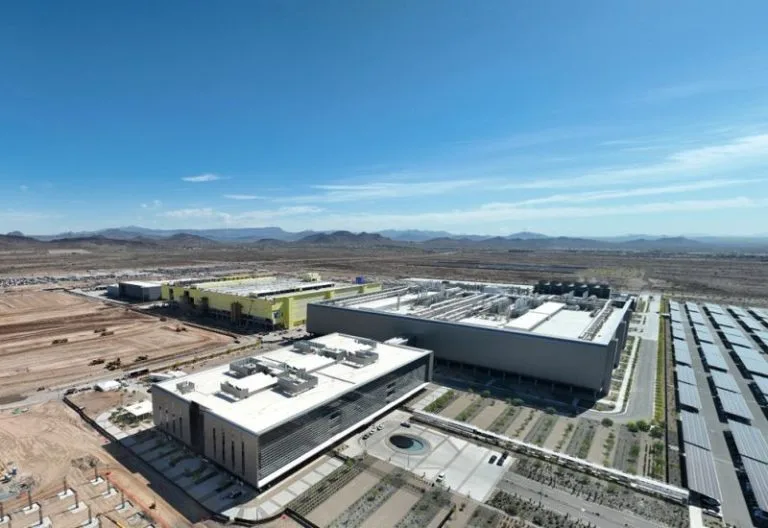
Samsung Electronics is progressing with the development of its next-generation high-bandwidth memory, HBM5, which will incorporate advanced 2-nanometer (nm) process technology. This follows the company’s recent success with HBM4 memory, a product whose quality has gained the confidence of Nvidia, a prominent graphics and AI computing firm.
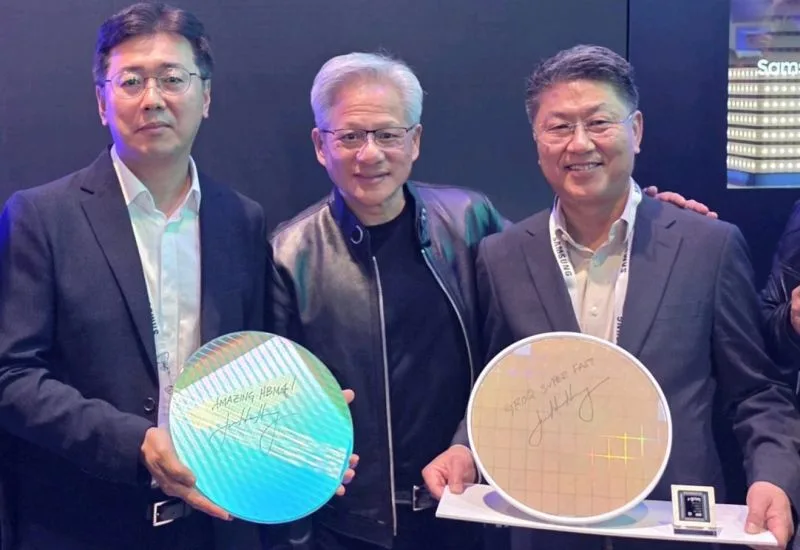
Earlier this month, Nvidia’s CEO Jensen Huang publicly praised Samsung’s HBM4 memory while showcasing a silicon wafer containing HBM4 chips. This demonstration signified strong trust in Samsung’s capability to deliver high-quality memory solutions critical for demanding applications in graphics processing and artificial intelligence.
Building upon this progress, Samsung is actively working on both HBM5 and an enhanced version, HBM5E, aiming to push the boundaries of memory performance and efficiency further. The integration of 2nm chip technology in HBM5 represents a significant step forward in semiconductor manufacturing, promising higher bandwidth and lower power consumption compared to previous generations.
The cooperation between Samsung and Nvidia highlights the strategic importance of advanced memory technologies in powering next-generation computing workloads. HBM memory is a key component in accelerating data-intensive tasks, including machine learning models and high-end graphics rendering, by providing fast and energy-efficient memory access.
Samsung’s move toward 2nm chips within HBM5 signals ongoing innovation in the memory industry, as companies strive to meet growing demands for performance and scalability. While specific details regarding the release timeline or exact specifications of HBM5 and HBM5E have not been disclosed, the development underscores Samsung’s commitment to maintaining a leading position in semiconductor solutions.
As data centers, AI applications, and advanced computing continue to expand, the advancement of cutting-edge memory technology like HBM5 will play a crucial role in supporting future innovation and computational capabilities across various sectors.
Samsung is developing HBM5 memory with cutting-edge 2nm chips, following successful collaboration on HBM4 with Nvidia.