App Store Sees Surge in New Apps Amid Growth of No-Code Platforms in Early 2026
July 21, 2026
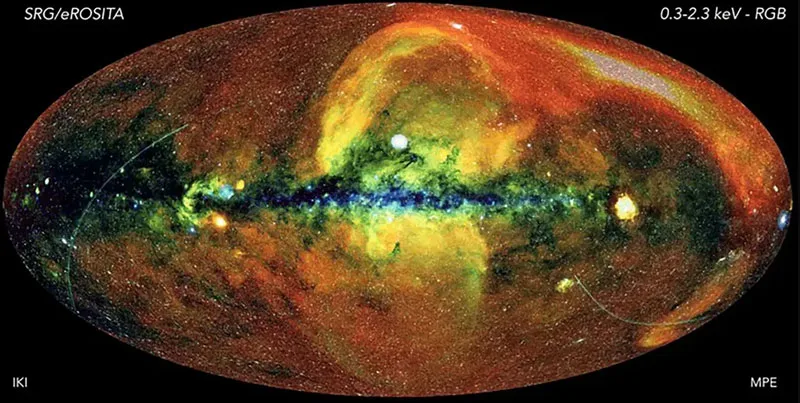
A collaborative effort involving a joint German-Russian space mission has produced a groundbreaking view of the Solar System’s dynamic environment. Data collected by the eROSITA space telescope, an X-ray observatory, has revealed a phenomenon described as the Solar System’s “breathing,” a discovery that transforms understanding of solar wind interactions.*
Though the eROSITA telescope was forcibly shut down following geopolitical developments in early 2022, its operation prior to this event yielded substantial scientific dividends. Beginning in 2019, eROSITA conducted four comprehensive surveys of the sky, amassing a rich dataset still under active analysis by the scientific community.
Among the most significant findings, researchers identified fluctuations in X-ray emissions that reflect cyclical variations in the Solar System’s structure, linked to the solar wind — the continuous flow of charged particles released by the Sun. This phenomenon has been described metaphorically as the Solar System “breathing,” as regions of charged particle density expand and contract influenced by solar activity.
The discovery provides unprecedented opportunities to deepen the study of solar wind dynamics. Solar wind plays a critical role in shaping space weather and influencing the heliosphere, the vast bubble of charged particles enveloping the Solar System.
Prior to eROSITA’s observation, detailed mapping of X-ray emissions related to solar wind interactions had been limited, with much of the knowledge based on indirect measurements. The new data set allows researchers to directly observe the temporal and spatial variations connected to the Sun’s energetic output.
This enhanced understanding may contribute to better forecasting of solar storms and help in assessing their potential effects on Earth’s space environment, satellites, and communication systems.
While eROSITA’s mission was curtailed, its archive continues to be an invaluable resource for astronomers and space scientists worldwide, affirming the importance of international collaboration in advancing knowledge about our cosmic neighborhood.
Future research building on eROSITA’s data promises further insights into heliophysics, and how the interaction of solar wind with planetary magnetospheres and interstellar material shapes the complex dynamics of the Solar System.
Unique X-ray data from the eROSITA telescope reveals the Solar System’s dynamic ‘breathing,’ offering fresh insights into solar wind behavior.