
Memory Chip Makers Face Potential DRAM Oversupply by 2028 Amid Massive Capacity Expansions
July 20, 2026
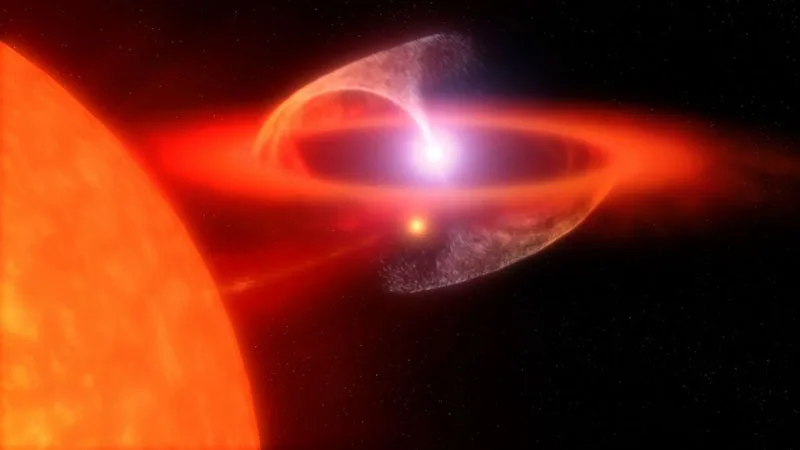
Four years ago, astronomers reported a curious cosmic phenomenon: long-periodic radio transients (LPTs). These signals, characterized by unusual and lengthy periodicities, defied easy explanation, puzzling scientists about their source and nature. Following this initial discovery, about a dozen more instances of similar radio signals have since been observed, each posing unique observational challenges due to differences in how and when they were detected.
One of the major difficulties in decoding these signals has been the fragmented nature of the data. Each LPT source exhibited its own distinct pattern, making it tough to identify a unifying cause or trend across occurrences. This impediment has persisted until very recently, when a newly found LPT signal effectively consolidated the key characteristics observed in all preceding cases. This source has been referred to as the “Rosetta Stone” of LPTs, as it aligns the previously scattered clues into a cohesive framework.
While details about the precise mechanisms generating these enigmatic signals remain to be fully uncovered, the breakthrough marked by this discovery represents a significant advancement. By unifying these cosmic radio events under a singular observational umbrella, researchers are now better positioned to scrutinize the underlying astrophysical processes.
The origin of long-periodic radio transients has long been a subject of intense speculation and study. Their irregular and prolonged periodicity differentiates them markedly from many known types of fast radio bursts and other transient cosmic signals, prompting inquiries into whether new astrophysical objects or phenomena are at play.
As researchers continue to analyze the comprehensive data pooled from multiple LPT sources, there is cautious optimism that further insights into their origins and implications may soon emerge. This progress not only enhances understanding of cosmic radio transients but also broadens the horizons of radio astronomy and space science in general.
The scientific community anticipates that continued observations and analytical efforts will build on this foundational discovery, illuminating the complexities of signals emanating from the depths of space. The implications extend beyond merely cataloging cosmic phenomena, potentially unlocking new knowledge about the behaviors and characteristics of objects in the far reaches of the universe.
A newly discovered cosmic radio source has unified key clues about long-periodic radio transients, bringing scientists closer to their origin.