
TSMC Plans $265 Billion Investment to Expand U.S. Chip Manufacturing Amid Rising Competition
July 20, 2026
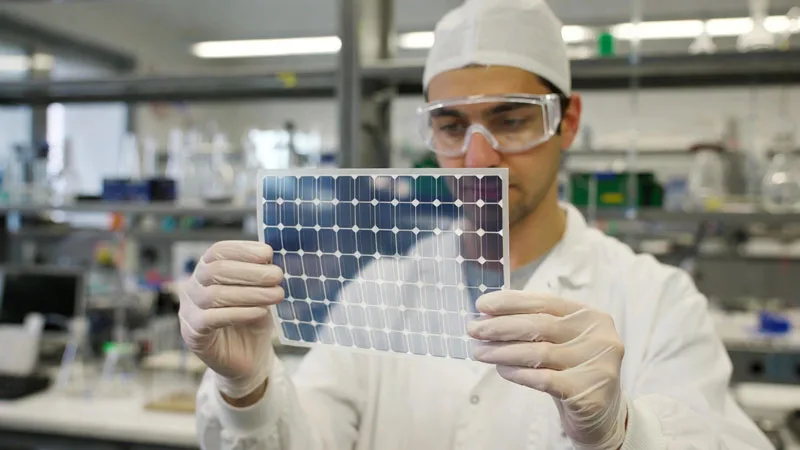
Scientists at the Polytechnic University of Madrid (UPM), working within the SyNC group at the Institute for Solar Energy, have engineered a new breed of ultra-thin solar panels utilizing two-dimensional materials. These innovative solar elements aim to provide a more versatile and aesthetic alternative for integrating solar energy generation directly into building facades.
The research team has developed prototypes of these advanced panels through a series of experiments focused on refining the materials and manufacturing processes. Two-dimensional materials, which consist of sheets just a few atoms thick, offer characteristics such as flexibility and reduced weight, allowing them to be seamlessly applied to vertical surfaces like the exteriors of skyscrapers.
Computational modeling conducted as part of the project indicates that if typical high-rise buildings in Madrid were covered with these two-dimensional solar panels, approximately 30% of their electricity demand could be fulfilled by this integrated solar solution. This holds promising implications for urban energy sustainability, potentially reducing reliance on external power sources while minimizing the footprint of traditional rooftop solar installations.
The technologies explored also point toward commercial scalability, addressing challenges to cost-efficient production of these novel panels. Their ultra-thin design could enable applications beyond conventional solar arrays, blending energy generation with architectural aesthetics without adding significant bulk or weight.
This breakthrough represents a meaningful step forward in solar energy integration for urban environments, combining novel material science with practical considerations for commercial viability. While further development and large-scale testing remain necessary, this approach highlights the potential for renewable energy solutions adapted specifically to modern building infrastructure.
As cities continue to seek ways to reduce carbon emissions and enhance energy independence, such innovations in solar panel design may play a critical role in shaping the future of sustainable architecture and urban power systems.
Spanish researchers have created ultra-thin two-dimensional solar panels designed to efficiently power building facades, potentially covering 30% of skyscraper energy needs.